
Exploring Design Versatility
Color Palettes and Modern Aesthetics
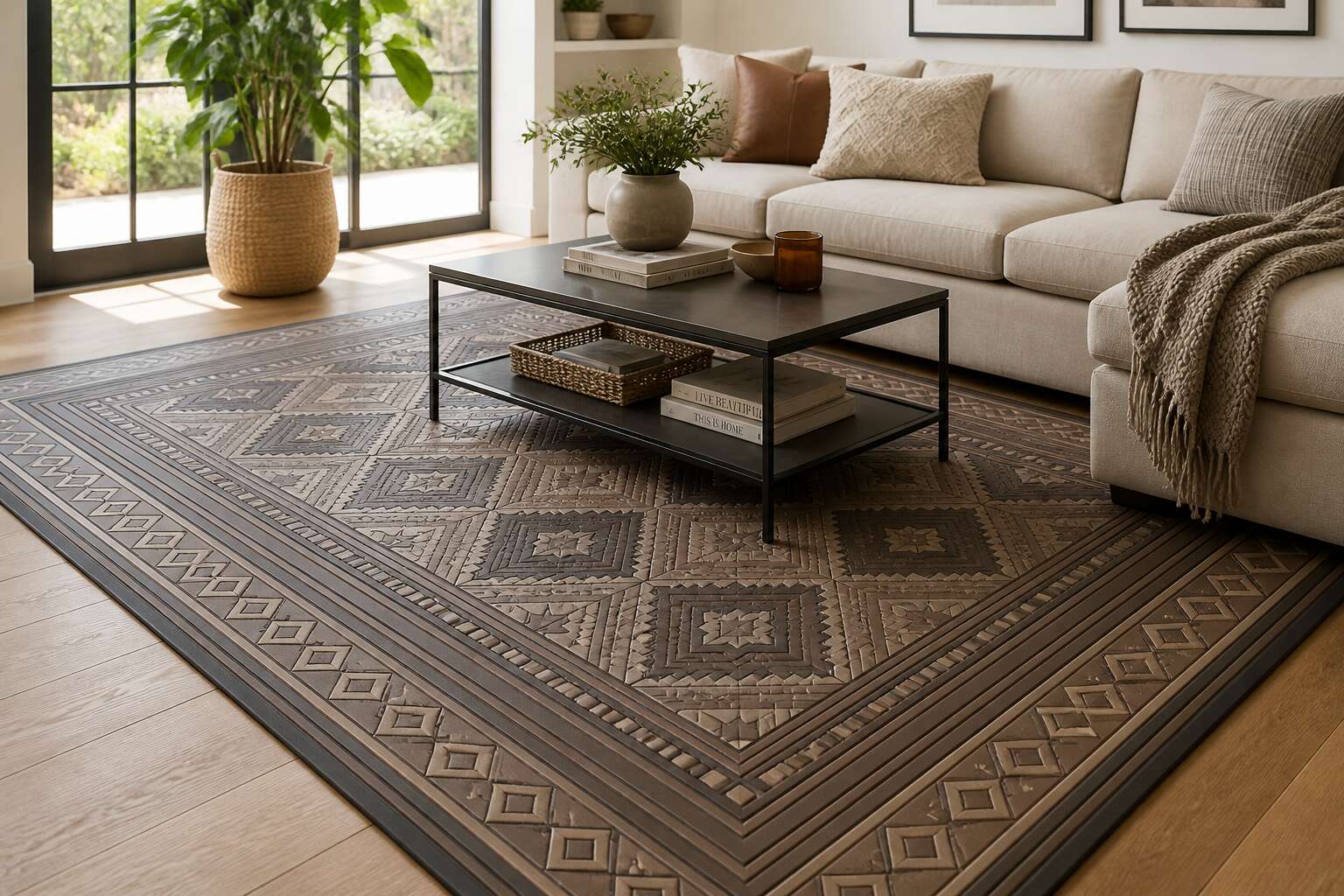
Rubber floor mats decorative choices reveal something about how we occupy space. The muted greys of minimalist interiors no longer dominate. Homeowners in Johannesburg and Cape Town now select bold terracotta, deep forest green, and warm ochre tones found across the Highveld. These palettes transform a functional surface into an intentional design element. This choice carries intent.
- Matte finishes soften reflections and reduce visual noise.
- Textured surfaces add depth without demanding attention.
- Two-tone patterns bridge the gap between industrial and organic.
I find myself drawn to restraint in modern settings. A single rubber floor mats decorative piece can anchor a room. The colour stays understated. It remains steady. There is something honest about a floor covering that serves its function and still looks refined. The best choices feel inevitable in their context.
Embossed Patterns and Textures
The tactile language of a floor is often overlooked. Embossed patterns on rubber floor mats decorative surfaces do more than please the eye. They alter how we read a room. A raised chevron directs movement. A stippled grain softens footfall. These textures work with the material’s natural grip, creating quiet wayfinding without signage.
- Geometric tessellations for structured interiors.
- Organic swirls that mimic weathered stone.
- Fine crosshatching for understated depth.
Each embossed choice responds differently to afternoon light. The shadows shift across the ribs, revealing contours that change with the hour. This versatility allows a single mat to serve a corridor or a boutique. The pattern becomes architecture. It invites touch, and that instinct becomes part of the design. An embossed rubber floor mats decorative piece holds its own.
Unique Shapes and Custom Cut Options
One standard rectangle cannot serve every doorway. That is why custom cut options have become essential. In Durban, I have used rubber floor mats decorative to match pentagonal planters and circular lift thresholds. The process involves measuring, drafting, then cutting with a utility knife. Unique shapes solve real problems. A curved mat follows a bay window. A stepped mat fits a landing with two heights.
Custom shapes also support practical functions. For a restaurant kitchen, we cut mats with drain slots. For an art gallery, we added a beveled edge to stop trips. Consider these custom requests:
- Interlocking puzzle forms for large open offices
- Circular segments to ring a fountain base
- T-shaped pieces for adjacent corridors
The result is a floor system that responds to the architecture. Rubber floor mats decorative become part of the building’s function, not an afterthought.
Practical Advantages Beyond Appearance
Enhanced Safety with Anti-Slip Properties
A decorative surface that shifts underfoot is a hazard, not a feature. Rubber floor mats decorative, by design, offer a tactile grip that hard flooring cannot match. The natural friction of the rubber compound holds firm, even on polished tiles or wooden boards. I have tested this on rainy Cape Town mornings, and the difference is tangible! Consider the spots where slips happen most often:
- The back door when shoes are still wet
- The kitchen sink after a soapy splash
- The bathroom floor when steam has settled
These mats anchor themselves without adhesive, which makes them a practical choice for rentals. The anti-slip backing prevents the daily micro-sliding that wears down other mats. Rubber floor mats decorative manage this balance between beauty and function. For households with elderly members or young children, this grip provides reliable protection.
Protecting Flooring from Scratches and Stains
According to a local flooring specialist, scratches account for nearly 60% of wood floor complaints in Cape Town homes. That statistic makes me wince when I see a furniture leg dragged across a dining room floor. Rubber floor mats decorative intercept the damage before it reaches your precious surface.
Spills tell a similar story. Red wine, coffee, or the inevitable braai sauce can stain untreated timber within minutes. Rubber floor mats decorative absorb the liquid, sparing you the awkward task of hovering over guests with a cloth. Consider the common culprits:
- Chair castors on tiles
- High heel marks near the entrance
- Pet claws on laminate
The rubber dampens each of these daily abrasions. Its natural resilience protects the floor and reduces future repair costs.
Acoustic Insulation and Comfort Underfoot
The Acoustical Society of South Africa reports that bare concrete floors can amplify footfall noise by up to 12 decibels. I have stood in open plan kitchens where every step echoed like a drumbeat. Rubber floor mats decorative interrupt that percussive cycle, their dense internal structure converting impact into near silence. The result is a room that exhales.
- Children’s play areas, where running feet become muffled thuds.
- Home offices, where a rolling chair no longer announces each movement.
- Bedroom corridors, where late night trips to the bathroom stay discreet.
And then there is the ache. Hard surfaces punish the knees, the hips, the lower back. Standing on timber for an entire afternoon leaves a deep fatigue that creeps upward. Rubber floor mats decorative offer a merciful resilience, giving just enough to spare your joints that relentless grind. What a relief it is to stand without rebuke!
Easy Cleaning and Maintenance
Spilt coffee, muddy boots, sticky fingers. Rubber floor mats decorative face them all without complaint. A damp cloth and mild soap handle most messes. No scrubbing, no special chemicals, no weekend project.
- Wipe splashes before they settle.
- Rinse caked mud off with a hose.
- Pat dry with a towel and lay back down.
That is the whole ritual. The material resists absorption. Stains stay on the surface instead of sinking deep. Even after months of heavy traffic, the colour holds. For South African homes, where dust and rain trade places without warning, this resistance is a quiet luxury. You spend less time maintaining the floor and more time living on it.
Selecting the Right Mat for Every Room
Kitchen and Dining Areas
On any evening, a South African kitchen floor absorbs more spills and footfall than any other surface. Your choice of rubber floor mats decorative must account for these daily rhythms. In the kitchen, focus on zones like the sink and prep area. I find a lower profile mat works best beneath cabinetry, while a thicker option at the island reduces leg fatigue during long cooking sessions.
For dining areas, consider the flow of chairs and feet. Rubber floor mats decorative here should extend beyond the table edges so chairs roll smoothly. When measuring, keep these points in mind:
- Allow 60 cm of clearance when chairs are pulled out.
- Use a beveled edge to prevent tripping at doorways.
That extra length changes everything! The right mat protects the surface below and supports how your family moves through the room.
Entryways and Mudrooms
Every South African home has a doorway that absorbs the day’s first impact. Boots carry winter rain from the Karoo or red dust from a Free State farm. Rubber floor mats decorative must catch that grit before it travels deeper into the house.
Entryways demand weight. A thin mat slides underfoot and fails. I have watched too many good stoeps ruined by that. A heavier rubber base grips the heel of a boot and stays put. Deep channels trap sand and water.
The mudroom changes the equation. This mat gets hosed down weekly and dragged through mud season after season.
- Thick raised edges contain pooling water
- Dense rubber cores resist tearing from spade handles
- Dark textures hide the stains that follow the harvest
The transition from soil to polished floor is where damage begins. Rubber floor mats decorative at this threshold keep the rest of the home cleaner, which matters after a long day in the fields.
Home Office and Living Spaces
Living spaces ask something different from a floor covering. A lounge that hosts bare feet and weekend naps needs a mat that feels deliberate, not industrial. Rubber floor mats decorative have found their way into these rooms precisely because they no longer look like utility equipment. In a home office, the equation shifts toward function. Castor chairs rake across the surface daily, and a mat that wrinkles under pressure becomes a hazard. I have seen thin mats fold themselves into ridges under a desk chair. Rubber floor mats decorative designed for studies now balance that durability with a matte finish that suits wooden desks and leather chairs.
Choose by movement first. A busy study demands a rigid backing. A quiet reading corner only needs visual balance.
- The weight of the mat sits differently in a study than a lounge.
- The backing behaves differently over carpet than over timber.
- The surface temperature changes with the morning sun.
The right selection turns a practical layer into part of the room’s character.
Bathroom and Laundry Areas
The bathroom is the only room where water is intentionally directed at the floor. In South Africa’s coastal humidity, a mat that traps moisture against tiles is an open invitation to mildew. Rubber floor mats decorative have become a standard fix because they let water pass instead of soaking it up.
Your only real consideration is drainage. In my experience, thickness matters more than pattern. A mat that stays wet underneath will foul the grout. Models with channels or perforations work best for this reason:
- a ribbed top keeps feet above standing water
- an open grid rinses clean with a bucket
- a lighter weight makes lifting easy
The laundry room follows the same thinking. A vibrating machine shifts a mat across smooth tile, and a leaking hose can turn it into a soap film trap. A low profile keeps door clearances intact and lets the mat dry naturally.
Garage and Workshop Floors
Motor oil, brake fluid, and grit. Those three substances are the real test for a workshop floor. Rubber floor mats decorative have moved beyond living spaces, and in a garage they earn their place differently. A mat here endures rough treatment that a bathroom mat never encounters. It survives because the compound is dense and the surface is closed, meaning spilled solvent does not soak into the material. What a workshop mat needs is simple:
- a non-absorbent top layer
- edges that lie flat, so a caster can roll over them
- enough weight to stay put under a dropped tool
Rubber floor mats decorative in a garage protect the concrete underneath and keep the space bearable when you are lying on your back. In South Africa, where a garage often doubles as a workshop for nine months of the year, that matters more than the pattern on the surface.
Decorating with Color and Texture
Minimalist and Contemporary Styles
Contemporary interiors thrive on restraint, yet texture remains the silent storyteller. When you introduce rubber floor mats decorative into a minimalist room, the effect is less about covering a surface and more about defining how light and shadow interact with the room’s geometry. A muted palette allows the mat’s grain to become a focal point.
In contemporary settings, color tends to recede while texture steps forward. You might select a mat with a subtle woven finish or a soft, brushed surface. These elements ground the space without demanding attention. The goal is a visual calm that still rewards a closer look.
- Choose tonal variations that echo the room’s existing neutrals
- Select surfaces that catch low-angle light from windows or spotlights
- Keep any pattern geometric and uncomplicated
For South African homes blending urban minimalism with natural warmth, rubber floor mats decorative offer a practical way to introduce depth without clutter. A restrained color approach, paired with tactile complexity, turns a functional necessity into a deliberate design choice.
Industrial and Rustic Pairings
The industrial aesthetic in South African warehouses turned homes relies on honest materials. Concrete, steel, and timber carry the visual weight. Rubber floor mats decorative can clash with this vocabulary or complete it. The difference lies in color and surface treatment.
For concrete floors, I’ve found that a coarse grain in burnt orange or olive introduces warmth without pretending to be something it is not. The color references the raw environment. The texture speaks to the same industrial process that shaped the surrounding surfaces. In rustic settings, a leather-like grain or a deep brown with a matte finish holds its own against weathered wood and stone.
- Burnt sienna ribbed mat on polished concrete
- Charcoal grey speckled mat beside exposed brick
- Deep olive smooth mat under reclaimed timber
This restraint explains why rubber floor mats decorative succeed. They echo the room’s palette without demanding attention. The mat becomes part of the room’s material language rather than an interruption.
Layering Rugs and Mats
Layering woven sisal over rubber floor mats decorative creates a tactile exchange that changes how a room feels. The hard rebound of rubber absorbs footfall, while the sisal scrapes under bare feet. I did this in Johannesburg and the contrast gave the room a second dimension. Choose a mat in neutral grey or sand, then place a patterned rug on top, leaving a visible border. That sliver of rubber anchors the rug and prevents slipping.
For tighter spaces, use a ribbed surface mat under a flatweave carpet. The ribs add grip without raising the profile. Three pairings that work well:
- Burnt orange rubber mat under a navy wool rug
- Charcoal textured mat beneath a pale jute carpet
- Smooth black mat with a leather hide rug
The trick is letting rubber floor mats decorative contribute their own texture rather than hiding it.
Custom Designs and Logos
A bare floor tells you nothing. Rubber floor mats decorative change that. A mat with a custom logo in burnt sienna works well at a reception desk. Texture should match the space. A dimpled surface suits high traffic areas. A brushed finish works for quieter rooms.
- Single logo debossed in the centre
- Repeating pattern along the border
- Contrasting edge strips in a second colour
The colour of a mat changes its role. A grey mat blends into the floor. A mustard mat draws attention. In a Pretoria office, I saw a rubber mat with a woven pattern and the company’s initials. Nothing else in the room explained the brand. The mat did!
Care, Durability, and Sustainability
Eco-Friendly Rubber Materials
A single rubber tree yields latex for 30 years. That longevity carries into the finished product. Rubber floor mats decorative options often outlast synthetic alternatives by years, given proper care. Avoid harsh chemicals and prolonged direct sunlight, as both can break down natural rubber.
- Rotate mats periodically to even out wear.
- Use felt pads under heavy furniture legs.
- Inspect backings regularly for debris that reduces grip.
Durability comes from natural elasticity. It resists tearing and compression under heavy furniture or foot traffic. This makes rubber floor mats decorative a sound investment for South African homes and offices. The material’s resilience also means fewer replacements over time.
Eco-friendly production uses less petroleum than PVC mats. Many manufacturers now use natural fillers and non-toxic pigments. The result performs and then biodegrades, not landfill waste! Consider these environmental benefits:
- Rubber trees absorb carbon dioxide while growing.
- Latex harvesting requires no tree felling.
- Old mats can be recycled into playground surfaces.
Long-Term Wear and Durability
Rubber floor mats decorative options earn their keep through practical resilience. A well-made mat holds its shape even after heavy furniture sits on it for months. The material’s molecular structure compresses under load and springs back when released, resisting tears and indentations.
Care remains straightforward but consistent. Sweeping removes abrasive grit that grinds into the surface over time. Damp mopping with mild soap restores the colour without stripping protective oils. The payoff is a mat that still looks presentable when cheaper alternatives have surrendered to cracking or curling.
- Store spare mats flat to prevent warping.
- Keep mats away from open flames and embers.
- Lift mats when moving heavy objects across them.
Sustainability long-term wear means replacing mats less frequently. Rubber floor mats decorative prove their worth over decades. Each year of service delays disposal and reduces manufacturing demand. Natural rubber eventually biodegrades, avoiding permanent landfill contribution.
Simple Cleaning Routines
Rubber floor mats decorative require little of your time. A dry swipe removes the grit that grinds into surfaces, and a damp cloth handles spills without soap. That restraint matters. Harsh cleaners strip the rubber’s natural oils, causing stiffness and cracking. A gentle routine preserves the material, which keeps the mat out of the landfill longer. Sustainability comes from fewer replacements, less manufacturing, and less waste. Natural rubber eventually biodegrades, but only after years of dependable service. A simple habit works:
- Wipe the mat dry once a week.
- Spot clean with water and a soft sponge.
- Air dry before putting anything back.
That is the whole method. They reward this light-touch care with decades of solid footing.
Signs It’s Time to Replace
Care for rubber floor mats decorative requires attention to their changing state. A mat that once lay flat now lifts at the edges, a clear sign of wear. Durability does not mean endless life; it means slow, visible aging.
Watch for three signs that replacement makes more sense than repair:
- Surface becomes tacky, losing its non-slip grip.
- Cracks appear where your heel lands daily.
- Odour persists even after airing.
These mats have reached their limit when they shred under the sole. Sustainability respects the material’s timeline, replacing only when performance fails, not when fashion fades. Obsolescence is a matter of function, not whimsy!
Year-Round Upkeep Guide
Caring for rubber floor mats decorative across all four seasons is a steady practice, not a reactive one. Winter salt demands a weekly rinse with cool water, while summer ultraviolet rays call for periodic rotation to prevent fading. Durability takes shape through this rhythm, as the material keeps its elasticity when stress spreads evenly.
Sustainability year-round hinges on how a mat interacts with its surroundings. A mat that drains and dries fully avoids mildew, the true enemy of longevity. I find that lifting mats overnight, roughly twice a month, allows airflow that no cleaning solution can replicate. The seasonal tasks follow an order: sweep debris daily, deep clean monthly with mild soap, and inspect edges quarterly for curling. This cadence honours the quiet timeline of rubber floor mats decorative.
0 Comments