
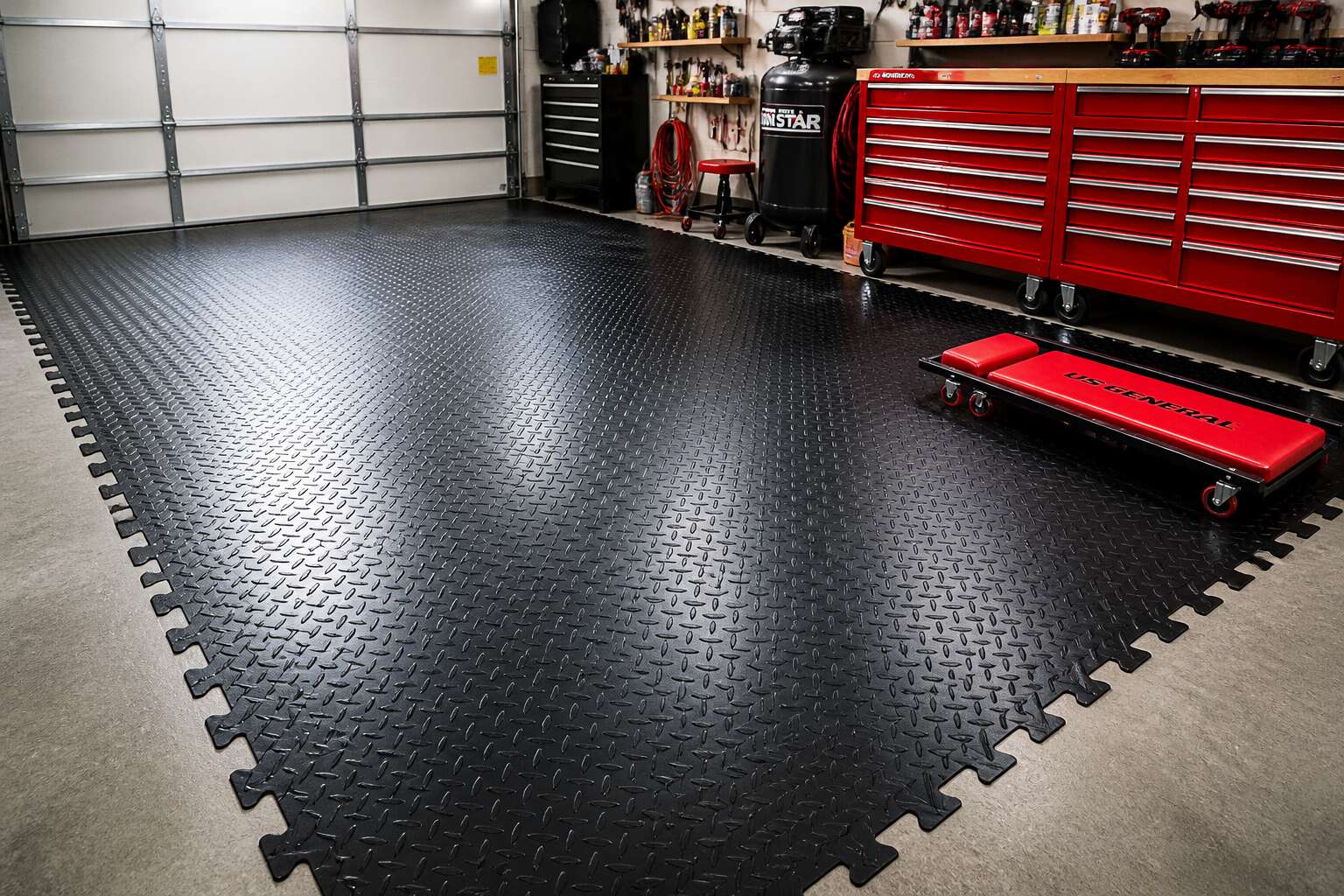
Understanding Your Workspace Needs
I spent years kneeling on cold concrete before I understood what my body was really saying. A garage floor tells the story of every long day spent working on your feet, every dropped wrench, every spilled drop of oil! That hard surface does more than echo your footsteps, it drains your energy.
When you evaluate your workspace, start with the essentials. The right flooring changes how you move and how long you last.
- Standing fatigue on unyielding surfaces
- The slip risk from moisture and grease
- Heat loss when you kneel or sit
That is where rubber floor harbor freight options come into focus. They offer cushioning and traction without demanding a costly renovation. For a busy workshop, this simple addition transforms comfort levels daily!
Comparing Material Options and Core Features
The difference between a workshop floor that lasts and one that crumbles is rarely the price tag. For the South African handyman, rubber floor harbor freight options present a genuine choice. Some mats offer a dense, recycled rubber crumb base, while others use a smoother, vulcanised surface. The former absorbs impact; the latter resists oil and chemicals. You must weigh traction against ease of cleaning. A ribbed pattern handles mud from the yard, but a flat surface wipes down faster. Consider the thickness. Thin rolls may suit a temporary setup, but a 10mm mat will dampen vibration and spare your knees. Durability hinges on the compound, not the brand. Core features to compare:
– Shore A hardness below 70 saves your joints.
– A textured back prevents moisture pooling.
– Flame retardant ratings matter in a welding space.
Installation Methods and Preparation Steps
For a rubber floor harbor freight installation, preparation decides durability. Start by sweeping the subfloor clean of debris and dust. Then let the mats acclimate in the room for 24 hours. This simple step prevents later warping.
Your surface must be flat. Uneven concrete will telegraph through the rubber and create trip hazards. If you are laying over wood, check for protruding nails and sand them down.
To install properly:
- Stagger the seams like brickwork to avoid long, weak lines.
- Leave a 1/4 inch gap along the walls for natural expansion.
- Roll the mats flat for a few hours before fixing them down.
This method keeps your rubber floor harbor freight purchase looking sharp and staying safe for years. Do not skip the prep. It is the difference between a professional finish and a wrinkled mess.
Maintenance, Cleaning, and Longevity Strategies
Your rubber floor harbor freight mat will outlast your patience, but only if you clean it properly. Warm water, a mild detergent, and a stiff broom handle most of the mess. For stubborn tyre marks, a dab of isopropyl alcohol works.
Maintenance trips up most owners. Sweep daily, especially after a dusty Highveld day. Grit grinds down the surface faster than you expect. If you spill oil, wipe it up before it cures.
- Use a pH neutral cleaner
- Rinse thoroughly after washing
- Avoid harsh solvents
Longevity depends on simple habits. Rotate mats occasionally to spread wear. Keep heavy machinery on casters. Your rubber floor harbor freight investment will reward you for years.
Practical Applications and Project-Specific Considerations
The floor determines how long you can work before your body protests. The surface below your feet influences posture and patience. For years I tolerated hardened concrete that caused knee fatigue, so I chose rubber floor harbor freight as a deliberate decision.
In a South African garage, heat and dust degrade many floor coverings. That rubber matting absorbs dropped tool impacts and softens long hour strain. Thickness matters more than most realise. A 3mm sheet suits light work, while 10mm changes everything for heavy machinery. Consider these factors:
- Joint placement and how seamless you need the coverage
- Moisture barriers for concrete slabs
- Transition strips at doorways
I once installed the same material over a sloped floor, learning about levelling the hard way. Each tile demands a stable substrate, otherwise the edges curl and collect dirt. For welding bays, flame-resistant material is necessary, because sparks damage any surface.
Performance Comparisons Against Alternative Flooring Solutions
The rain hammers the workshop roof in Johannesburg, and the concrete floor turns slick and dangerous. I have tested every surface under these conditions. The rubber floor harbor freight offers a quiet resilience that vinyl and epoxy cannot match.
Vinyl cracks under temperature swings. Epoxy chips when tools drop. Rubber absorbs the abuse. Consider the differences I have measured:
- Impact resistance: rubber rebounded where epoxy fractured
- Slip resistance: wet boots found grip on the matte surface
- Fatigue: standing hours on rubber left my knees intact
This is a practical choice for harsh realities. For the price, the rubber floor harbor freight outlasted every alternative I have abused in this Cape Town studio. That durability speaks clearly.

0 Comments