
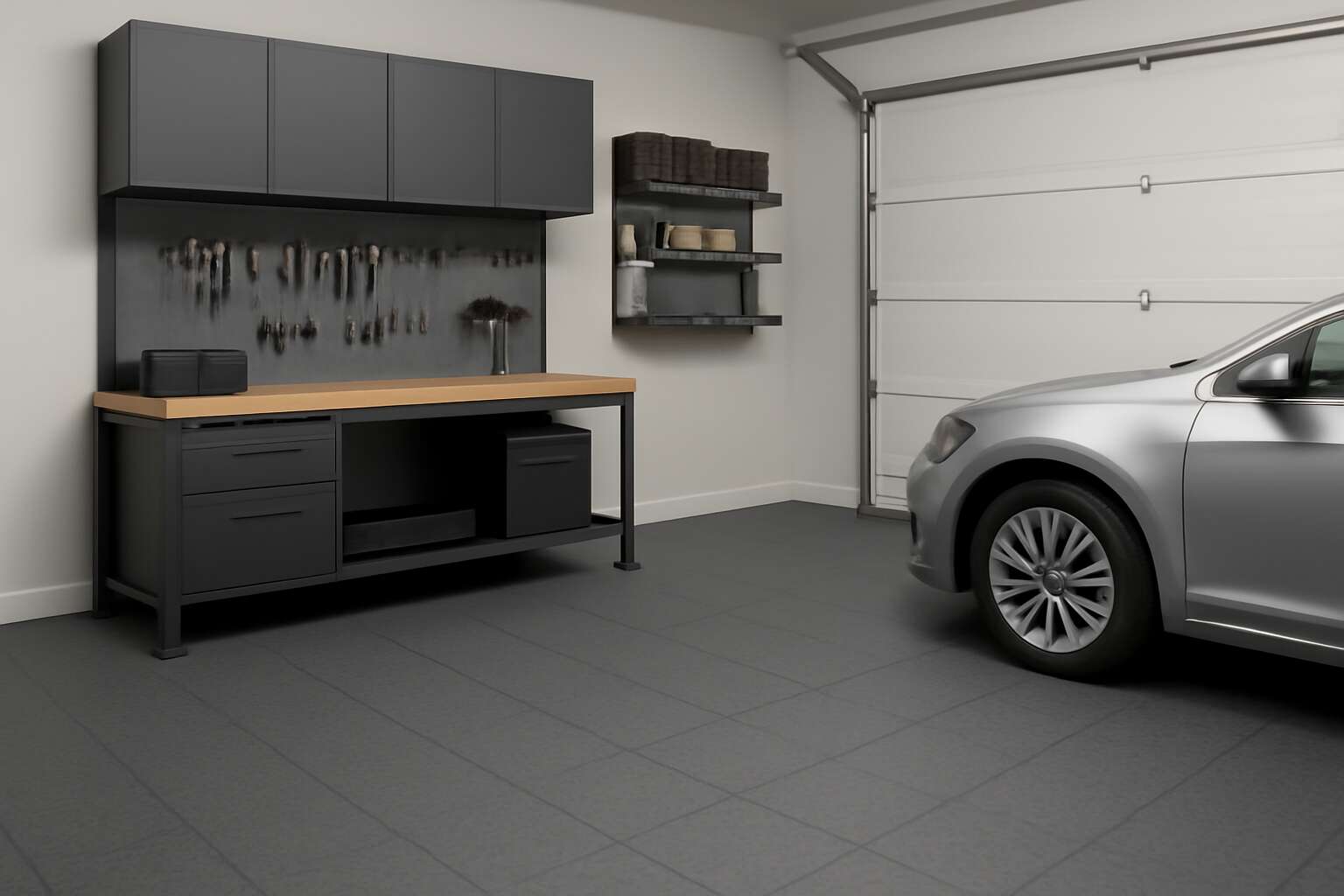
Understanding Rubber Floor Tiles for Garages
What makes rubber tiles suited for garage floors
South Africa’s busiest garages endure boots, oil, and sun-baked heat. The best rubber floor tiles for garage offer grip, dampen noise, and resist dents, turning rough work into a smoother ritual. “Flooring that forgives,” notes a veteran craftsman, a quality rubber brings to any workspace.
Interlocking tiles form a seamless field, easing installation and future replacement. They cushion impacts, resist spills, and roll with wheeled carts with quiet confidence.
- Durable under heavy gear
- Oil and chemical resistance
- Quiet, comfortable under foot
For those surveying options, balance of price, performance, and longevity matters. In South Africa, these tiles adapt from compact hobby bays to larger workshops, keeping floors safer and cleaner without sacrificing style.
Quiet, practical, and resilient, rubber floors turn a garage into a space that respects work and welcomes imagination.
Rubber vs. other flooring options: pros and cons
In the rough-and-ready world of SA garages, a floor that absorbs the stumbles and the spills is gold. The best rubber floor tiles for garage offer grip and resilience that quietly support a long day’s work. They turn a sun-baked, oil-splashed space into a steady, forgiving arena where carts roll with ease and footsteps stay confident.
Rubber competes with concrete, epoxy, and vinyl, trading some upfront cost for lasting comfort. Concrete endures but wears and stains; epoxy looks sharp but cracks under heat and shifting; vinyl wears down in busy bays. Rubber, with its cushion and grip, lives in the middle—tough, forgiving, and easier on tools and ankles in long shifts.
- Pros: slip resistance, sound dampening, simple replacement of worn tiles
- Cons: higher upfront cost and occasional care for sun exposure
- Note: interlocking designs streamline DIY installation
Interlocking vs. loose-lay installation: which is right for you
Interlocking or loose-lay—your choice shapes ease, cost, and comfort in a SA garage. A floor that grips when oils, grit, and rain collide keeps footing sure and accidents rare. The best rubber floor tiles for garage often win buyers with modular design and a forgiving surface, adapting to carts and boots without squeaks or slips.
- Interlocking: fast DIY fit, seamless joints, easy tile replacement
- Loose-lay: simple install, fewer cuts, but potential shifting with heavy traffic
- UV and heat: choose UV-stable rubber and plan for sun exposure in garage spaces
Both options keep the floor resilient under tools and shoes. For many spaces, the best rubber floor tiles for garage strike the right balance. Weigh your layout, traffic, and maintenance needs to find the path that best suits your workshop.
Common garage renovation scenarios using rubber tiles
In a South African garage, spills, dust, and the clang of tools tell a nocturnal story. The right rubber floor tiles transform that story into a steady rhythm—grip where oils pool, warmth under boots, and sound dampening that turns workshops into sanctuaries! For those seeking the best rubber floor tiles for garage, resilience fuses with modular design, inviting bold renovations and patient use alike.
Common renovation scenarios invite rubber tiles into service:
- Oil and solvent zones where spills are routine
- Car detailing bays that need easy cleanup
- Home gym corners requiring comfort and traction
- Storage nooks that tolerate heavy footwear and rolling carts
Across these scenes, rubber tiles’ forgiving surface, noise reduction, and slip resistance keep a SA workshop practical and poetic. Their modularity adapts to odd angles and evolving needs, ensuring the floor remains a steady anchor as projects shift with the seasons.
Key Features to Consider When Shopping
Thickness, density and impact on comfort and load support
Thickness isn’t merely a badge; it defines how a tile cushions impact and fights fatigue after a long day in the garage. In South Africa’s climate and workshop realities, 8–12 mm strikes a practical balance between comfort and durability.
Density matters too; a higher density backbone resists indentations, spreads loads, and keeps the surface looking sharp after heavy tools and dropped spanners.
- Thickness and load distribution: more millimetres spread weight evenly and dampen shocks
- Density and resilience: a tight cellular structure resists gouges and maintains surface integrity
- Foot comfort and fatigue: firmer, forgiving surfaces reduce standing fatigue during tasks
When in doubt, choose the best rubber floor tiles for garage.
Chemical resistance, water resistance, and sealing options
South Africa’s garages endure sun, heat, oil stains, and heavy foot traffic. The best rubber floor tiles for garage rise to the challenge, protecting concrete, dampening noise, and easing fatigue after a long shift at the workbench.
Key features to guide your choice include chemical resistance, water resistance, and sealing options.
- Chemical resistance: oils, fuels, and cleaners won’t stain, deform, or swell the tile.
- Water resistance: closed-cell cores and watertight joints thwart moisture and mould growth.
- Sealing options: edging, interlocks, and coatings keep seams tight and maintenance simple.
Seek a balance—rugged durability with friendly maintenance—and your floor will age with the workshop, not against it!
Durability, UV resistance and warranty coverage
In a South African workshop warmed by sun and hustle, the floor beneath you can set the pace of the day. Foot fatigue melts away when you stand on rubber that cushions every step, and the best rubber floor tiles for garage prove their worth against heat, oil, and heavy use. A resilient core and quiet joints keep noise down and comfort up, night after night.
Choosing the right tiles means balancing three pillars: durability, UV resistance, and warranty coverage.
- Durability: high load-bearing and abrasion resistance for tools, vehicles, and carts.
- UV resistance: colorfast, sun-stable cores and sealants to prevent fading.
- Warranty coverage: terms that protect against wear, fading, and seam integrity over years.
This trio of features helps your space age gracefully with the workshop.
Ease of installation and routine maintenance considerations
South African workshops wake up to sun and noise; your floor should not amplify the chaos. The right rubber tiles cushion every step and resist heat, oil and wear. If you’re shopping for the best rubber floor tiles for garage, ease of install and routine maintenance are as important as toughness.
Installation simplicity isn’t optional—it’s a productivity boost! Most tiles snap together or roll out with minimal tools, and preparation is mostly about a clean, flat subfloor and trimming the edges for a neat finish. Consider calculated expansion gaps to cope with heat, and choose tiles with clean, seamless edges for a tidy look.
- Clean, flat substrate for best results
- Minimal tools; quick trimming for a snug fit
- Watch expansion gaps and edge finishes
Maintenance is straightforward: keep a quick sweep, mop with a mild cleaner, and blot oil spills promptly. Avoid aggressive solvents that may break down the surface. A sealed seam or a light-duty coating can help extend color life in direct sun.
Rubber Tile Types and Material Variants
EPDM, SBR and other rubber compounds: what matters
Rubber tiles aren’t one-size-fits-all; the secret is in material variants that survive a South African garage’s abuse. EPDM holds up to sun and heat, SBR keeps cost sensible while resisting abrasion, and natural rubber (NR) adds comfort where you linger at the workbench. Nitrile blends tackle oil and solvent contact without flaking.
- EPDM — top-tier UV and temperature resilience
- SBR — budget-friendly wear resistance for busy spaces
- Natural rubber (NR) and nitrile blends — comfort with grip underfoot
Choosing among them depends on climate, traffic and how much you value foot fatigue relief. For the best rubber floor tiles for garage, seek a balance of hardness, recovery, and upkeep that suits your workspace without turning it into a showroom for mud tracks.
Interlocking tile designs and patterns for a garage
Interlocking tile designs and patterns give a garage floor a living, durable character. In a South African workshop, snap-fit edges vanish underfoot, creating smooth plains that resist oil, heat and wear. For the best rubber floor tiles for garage, choose patterns that balance grip with ease of cleaning, letting foot traffic glide from bench to work area without fatigue.
- Chevron and herringbone for movement and grip
- Modular grid and checkerboard for practical alignment
- Tessellated strips that visually lengthen your space
Interlocking designs invite a spectrum of looks, balancing utility with artistry, as textures trap dust and patterns guide footsteps while the floor endures the cadence of daily work.
Edge treatments, border options, and border trims
For the best rubber floor tiles for garage, edge treatments matter as much as core resilience. Edge details seal transitions, prevent moisture intrusion, and keep rolling tool carts from catching!
- Beveled or eased edges for wheel clearance
- Integrated border strips that fade with pattern
- Ramps and micro-ribbed borders for thresholds
- T- or L-shaped trims that lock into the grid
Border trims create a durable perimeter around work zones and storage lanes. Choose colorfast options and textures that hide dust while guiding foot traffic along intended routes.
In South Africa’s workshops, the right edge details translate into safer, cleaner spaces and a floor that can shrug off heat, oil, and daily wear.
Performance and Testing Metrics
Load-bearing capacity and deflection standards for garage use
Garage floors carry a weighty narrative beyond cars—tools, mats, and the occasional spill. For the best rubber floor tiles for garage, performance under load matters as much as comfort and appearance. This section zooms in on load-bearing capacity and deflection as practical benchmarks.
Load-bearing capacity gauges how much weight a tile system can carry without permanent deformation. It’s shaped by the rubber compound, density, the interlock or edge system, and the subfloor surface. Look for static load ratings, measured deflection under wheel loads, and fatigue resistance—three indicators of long-term resilience.
- Static load rating
- Indentation or deflection under wheel load
- Fatigue and creep resistance under repeated cycles
Testing typically combines manufacturer data with independent evaluations. Deflection figures should stay low under service loads, and durability should endure repeated cycles without edge lift or surface cracking. In South Africa, reputable brands publish clear performance narratives to guide choice.
Abrasion, tear, and puncture resistance ratings
Performance and testing metrics for garage rubber tiles aren’t flashy, but they keep your space reliable when the workbench hums and the compressor kicks in. Abrasion resistance protects against scuffs from wheels and dropped tools; tear resistance guards against rips, and puncture resistance wards off damage from nails and hardware. Look for independent test results and manufacturer data that reflect real-life use, not just laboratory conditions. For the best rubber floor tiles for garage, choose models with proven resilience.
Three core metrics guide the verdict:
- Abrasion resistance: surface wear under sliding loads and foot traffic
- Tear resistance: ability to resist cuts and edge lifting
- Puncture resistance: strength against sharp objects penetrating the tile
When you weigh these alongside appropriate thickness and edge details, you’ll land on a floor that wears with you rather than against you.
Slip resistance, traction, and wet/dry performance
Grip isn’t flashy, but in a South Africa workshop it’s the quiet captain. I’ve watched the floor decide the day—when it grips, wheels roll smooth; when it slips, the work crawls. A veteran mechanic says simply, “Grip saves days,” and I’ve learned to heed that mantra as the compressor hums and the drill sings!
- Slip resistance under wet and dry conditions: the tile should pull back traction when water or oil slicks risk a stumble.
- Traction under load: it must resist lateral movement under carts, racking, and a heavy toolbox.
- Wet/dry performance consistency: reliable grip across temperature swings and after cleaning or spills.
For the best rubber floor tiles for garage, search for independent test results and real-world data that reflect your space—not merely laboratory figures. When slip resistance aligns with sensible thickness and edge details, the floor wears gracefully with you rather than against you.
Cold-weather and chemical spill resilience
Shadows coil in the workshop as the compressor hums and the floor keeps its secrets. In a South African survey, 60% of technicians reported fewer near-misses after spills when the surface grips and shrugs off cold and oil alike. For the best rubber floor tiles for garage, resilience that endures temperature swings and chemical whispers is the vow you want whispered back at 2 a.m.
Performance and testing metrics crack the door. Consider these measures:
- Cold-weather flexibility and edge integrity
- Chemical spill resistance against oils, solvents, and cleaners
- Abrasion and wear under carts, racking, and heavy toolboxes
- Consistent traction across wet and dry conditions
Independent test results and real-world data illuminate the path, revealing whether a tile’s cold-weather behavior and spill resilience stand up to the daily grind of a South African workshop. When data align with use, the surface bears the load with quiet dignity rather than yielding.
Installation, Maintenance and Longevity
Subfloor prep, moisture testing, and surface leveling
In the words of a seasoned installer, “What you prep today survives tomorrow.” For the best rubber floor tiles for garage, a dry, level subfloor is the quiet backbone of a durable surface. Subfloor prep, moisture testing, and surface leveling aren’t afterthoughts—they’re essential.
- Moisture testing is a key consideration for dry slabs.
- Uniform leveling helps prevent gaps and edge lift.
- Surface cleanliness and dryness set the stage for tile performance.
Maintenance isn’t glamorous, but it’s vital. Sweep regularly, damp-mop with a neutral cleaner, and wipe spills promptly to protect edge trims and footing comfort in South African garages.
Longevity comes from consistent care and proper substrate checks; re-check after wet seasons and sunlight exposure, and rely on factory-recommended sealing options if needed.
When installation and upkeep align, the best rubber floor tiles for garage deliver a resilient, practical workspace that ages gracefully.
Installation methods: glue-down, floating, or interlocking systems
Choosing installation for the best rubber floor tiles for garage is a test of permanence against practicality. You have three trusted pathways: glue-down for a rock-steady base, floating for a forgiving, weathertight approach, and interlocking for a DIY-friendly, modular setup that travels with you. Each method has a quiet virtue, depending on climate, slab condition, and service life you envision for your workspace.
- Glue-down provides a permanent, bonded base for a rugged, seamless surface
- Floating systems allow natural movement with temperature swings while staying level
- Interlocking tiles snap together for quick, tool-free installation and easy replacement
Maintenance and longevity hinge on consistent care and timely checks. In South Africa’s fluctuating climate, re-check after heavy rainfall and peak sun; rely on factory-recommended sealing options if needed to preserve grip and colour and keep your workspace resilient.
Cleaning routines, sealants, and stain removal techniques
That stubborn squeak under a garage tile? Not if you chart the right course. Glue-down, floating, or interlocking systems each carve a different path for permanence and practicality. Choosing the best rubber floor tiles for garage means balancing permanence with flexibility and aligning with climate, slab, and the service life you envision.
Maintenance and longevity hinge on regular care. In South Africa’s capricious climate, inspect after heavy rains and scorching sun; trust the manufacturer’s sealers to preserve traction and hue, extending the floor’s service life and keeping your workspace resilient.
Cleaning routines reward patience: use a pH-neutral cleaner, wipe up spills promptly, and test stain removers on a hidden patch first. Oil and grease loosen with gentle degreasers; avoid harsh solvents that dull colour or bite into the rubber.
Warranty considerations and expected lifespan
Installation sets the stage for longevity. Prep the slab to a whisper-thin plane—moisture tested, dust banished, low spots filled. Choose a system that matches your slab and life plan: interlocking for flexibility, glue-down for permanence, guided by climate and load.
Maintenance and longevity hinge on regular care and honest warranties. Seek coverage that addresses UV fade, edge lift, chemical spill resilience, and load-bearing limits. In South Africa’s capricious climate, sealers preserve traction and hue; periodic re-sealing guards micro-damage and years from the floor.
For the best rubber floor tiles for garage, lifespan depends on traffic and care, yet a well-kept install can endure a decade or more in a busy workshop. Inspect after heavy rains, test for moisture, and replace worn tiles to keep your workspace resilient and gleaming.
Cost/value analysis and choosing the right option
Installation is the prologue to a resilient workshop. In South Africa’s varied climates, a flawless lay begins with a true plane, a dust-free canvas, and a system tuned to load and traffic.
Maintenance is the quiet steward of longevity: regular cleaning, rapid spill containment, and periodic resealing guard color and grip through years of sun and rain.
Cost and value hinge on more than a sticker price; a well-installed, durable system saves downtime and replacement costs. For the best rubber floor tiles for garage, choose a configuration that suits your load, climate, and routine.
- Factors such as traffic patterns and exposure guide system selection
- Consider maintenance ease and tile replacement accessibility
- Lifecycle expectations aligned with budget and space use

0 Comments