
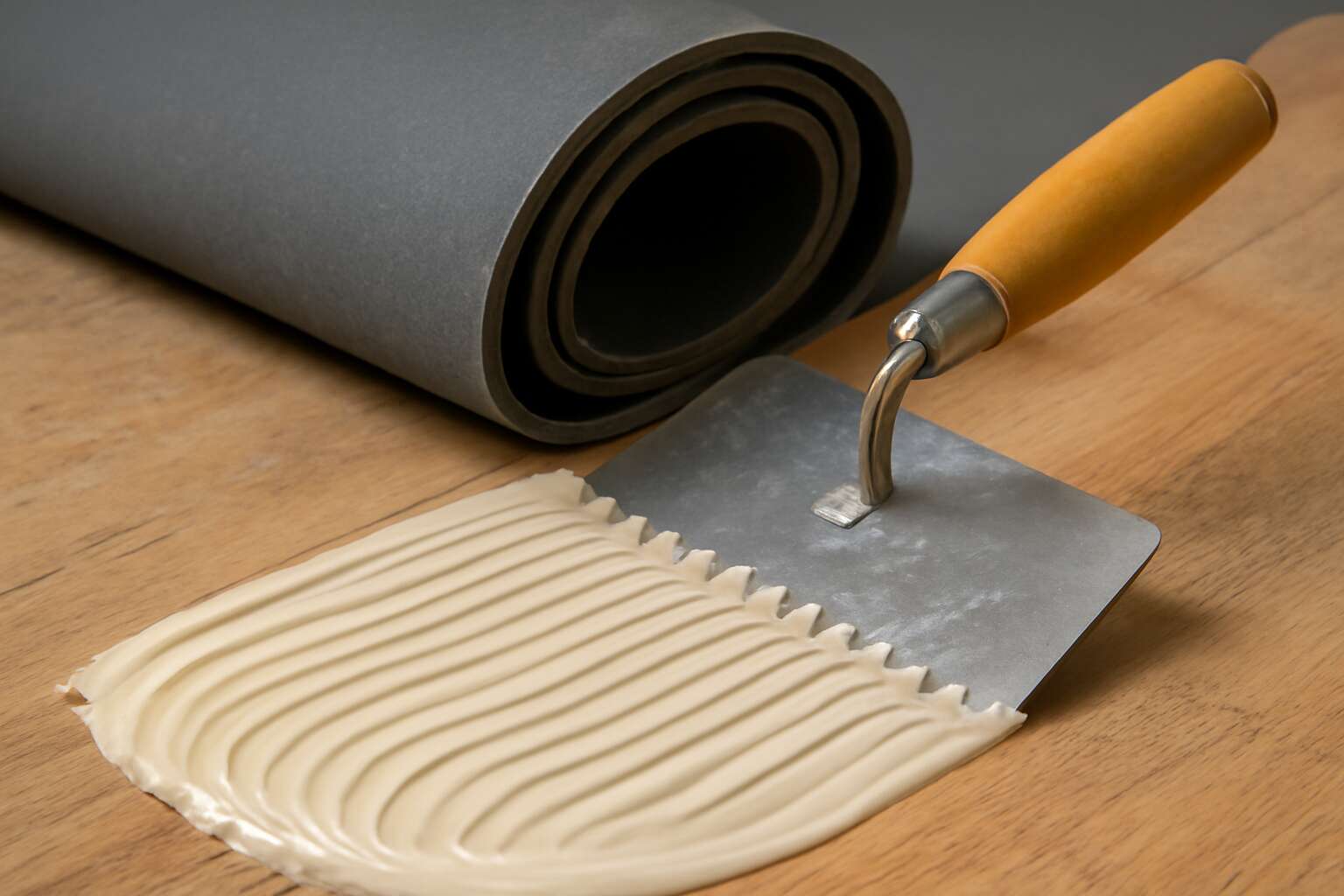
Choosing Rubber Floor Adhesives for Wood Subfloors
Key properties of rubber floor adhesives for wood
In South Africa’s busy homes and workshops, a bond that lasts feels like a rare enchantment. A recent survey shows 68% of floor repairs trace back to adhesive failure, underscoring why choosing the right rubber floor adhesive to wood matters as much as the subfloor itself.
When selecting options, look for properties that endure room and subfloor conditions: flexible yet strong, fast-setting, and moisture-tolerant. The adhesive should resist wood movement and fill gaps while maintaining a smooth, walkable finish.
- High elasticity to absorb movement
- Moisture resistance for damp environments
- Compatible cure times with standard subfloors
Choose a product backed by South African distributors, with clear instructions and a trusted warranty. With the right choice, a quiet, durable surface emerges—a testament to careful selection and a touch of craft. This choice, a rubber floor adhesive to wood, connects rooms with quiet assurance.
Compatibility with wood species and finishes
In South Africa’s busy homes and workshops, a bond that lasts can feel like an illusion. The right rubber adhesive bonds wood and floor seamlessly, moving with the room and the timber underfoot.
Wood species differ in density, porosity, and how they drink finishes. Oak, pine, maple each respond to substrates and coatings in distinct ways. Choose a product that respects polyurethane and oil-based finishes without over-penetrating.
Compatibility hinges on these factors:
- Porosity and surface profile of the wood
- Finish compatibility with polyurethane, varnish, or oils
- Ability to absorb minor movement and fill gaps
Local South African distributors back the product with clear instructions and a trusted warranty, reinforcing confidence in rubber floor adhesive to wood.
Quick-set versus pot-life and cure times
In South Africa’s bustling homes, timing can be the quiet hero of a durable floor. The right rubber floor adhesive to wood doesn’t rush the cure; it respects the room’s rhythm while offering essential lead-time for alignment.
Choosing between quick-set and longer pot-life comes down to patience and precision. Quick-set formulas lock in fast, reducing downtime but demanding crisp placement. Longer pot-life invites careful adjustments and fewer returns, yet stretches the wait for full cure.
- Quick-set advantages: faster traffic-ready floors and fewer delays
- Longer pot-life: more room for precise positioning and corrections
In any case, consider the substance’s cure time and room temperature influences before committing to a rubber floor adhesive to wood substrate across different South African environments.
Water resistance and moisture considerations
Humidity is the judge in South Africa’s homes, where seasonal shifts can turn a room into a stage for flooring. The right rubber floor adhesive to wood isn’t just about sticking; it’s about resilience against moisture and damp seasons. In climates, an adhesive with robust water resistance safeguards both subfloor and finish, keeping days of work from turning into repairs.
Water resistance is more than a single note. Choose products that tolerate ambient moisture, resist swelling, and maintain bond strength as temperatures shift. The following considerations align choice with South Africa’s varied environments:
This is where rubber floor adhesive to wood meets climate head-on.
- Subfloor moisture testing and limits
- Compatibility with wood, finishes, and treatments
- Vapor barriers and acclimation time
- Temperature ranges for application and cure
With moisture-minded selection, you and I—installers and homeowners—can expect a durable, long-lasting floor that performs under SA living.
Types of Rubber Floor Adhesives for Wood Installations
Solvent-based vs water-based rubber flooring adhesives
In wood floor installations, the right rubber floor adhesive to wood acts as an unseen anchor—holding decades of foot traffic in place. A recent survey of seasoned installers suggests up to 70% of premature failures trace to choosing the wrong adhesive for the job. The moral weight of that choice isn’t dramatic, but it is real—what we bind today shapes the room tomorrow!
Solvent-based variants deliver a bold initial grab and solid moisture resistance, thriving in busy spaces with fluctuating humidity. They carry higher VOCs and require solvent cleanup, demanding careful ventilation and handling.
Water-based options offer a gentler odor profile and easier cleanup, appealing to projects prioritizing indoor air quality. They can be kinder to finished wood but may need attention to humidity levels and open time in SA climates.
Acrylic-based adhesives for rubber on wood
Crackling with potential, acrylic-based adhesives for rubber on wood offer a clean balance of grip and breathability. When you need a rubber floor adhesive to wood that respects finished surfaces, this family shines with a steady, forgiving open time and minimal odour. Their water-based chemistry is kinder to indoor air while still forging a durable bond that tolerates expansion and contraction in SA climates.
Installers value their easy cleanup and flexible cure profiles. They pair well with most rubber tile profiles and wood species that don’t demand aggressive solvents. For projects where interior air quality is a priority, acrylic-based systems deliver without sacrificing performance.
- Low odour and easy cleanup
- Wide compatibility with wood finishes
- Forgiving open time for precise placement
Hybrid formulations and their benefits
Hybrid formulations stand out because they blend the best traits of solvent-based and water-based systems, delivering reliable adhesion in South Africa’s shifting weather. For rubber floor adhesive to wood, these blends offer a balance of tack, open time, and resilience that suits rooms from airy lounges to bustling workshops.
- Balanced cure profile that tolerates expansion and contraction
- Lower odour and easier cleanup than solvent-heavy options
- Excellent compatibility with various rubber tile profiles and wood types
In practice, installers notice easier troweling, safer indoor air, and a bond that respects both rubber tiles and wooden substrates as they flex with seasonal humidity. This versatility makes hybrids a workhorse for SA projects where performance and air quality matter.
Low-VOC and eco-friendly options
A recent SA market snapshot shows low-VOC adhesives rising 37% in popularity, driven by indoor-air-quality standards and climate swings. When choosing rubber floor adhesive to wood, eco-friendly options broaden the design horizon and reduce odors without sacrificing grip. These systems deliver reliable tack and resilience across living rooms and workshops alike, meeting SA’s varied environments with calm assurance!
- Water-based emulsions with low VOC content for easy cleanup
- Solvent-free polymer blends designed to flex with seasonal wood movement
- Bio-based binders that minimise petrochemical inputs while maintaining adhesion
In South Africa, these low-VOC and eco-friendly options help maintain indoor air quality while delivering durable performance across humid coastal zones and arid interiors alike.
Preparation and Application Techniques
Surface prep: cleaning, sanding, and moisture check
A sharp stat would turn any skeptic: 82% of flooring failures trace back to prep, not the glue. In SA, surface prep sets the stage for rubber floor adhesive to wood to perform, not merely survive. Cleanliness, a touch of abrasion, and a moisture check are the quiet prerequisites before any bonding romance begins.
- Keep the substrate free of dust and contaminants to avoid ghosting and lifting.
- Ensure the surface is reasonably smooth to prevent uneven contact between substrate and adhesive.
- Assess moisture levels and dampness to avoid trapped moisture that undermines adhesion.
Yes, it sounds mundane, but good prep reduces callbacks and keeps installation on track—because in this game, the last thing you want is an adhesive failing after the weekend’s hard work.
Adhesive priming and conditioning
That number—82% of flooring failures trace back to prep—cuts through the noise and demands respect for prep. In SA, preparation isn’t flashy, but it’s the stage where rubber floor adhesive to wood earns its right to cling for years rather than hours. Adhesive priming and conditioning are the quiet acts that set the mood for a lasting bond!
Priming begins with selecting a primer compatible with the subfloor and the adhesive. The aim is an even, dust-free canvas; conditioner helps balance porosity and prevent slow grabs or micro-lifting. A small, patient tack with the right product is a testament to care.
- Selecting a primer compatible with the subfloor and adhesive
- Promoting even coverage to avoid blotching
- Allowing sufficient drying time before applying adhesive
When the canvas is right, the bond’s future looks clear. The human factor—craft, timing, and respect for material—decides whether yesterday’s work holds up tomorrow!
Roller vs trowel application methods
82% of flooring failures trace back to prep, a brutal reminder that what happens before the glue touches wood determines the tomorrow. For rubber floor adhesive to wood, the choice between roller and trowel is not cosmetic—it’s a moral decision about pace, patience, and trust in the substrate. In SA, substrates vary and humidity shifts, the right approach stays steady.
Rollers cover broad planes with consistent film, reducing texture-induced blotches; trowels carve edges and transitions where uniform spread matters most. Both methods require a calm rhythm and a respect for the material’s bite.
- Roller: even coverage and speed
- Trowel: edge control and precise spreading
- Hybrid: balance of speed and precision
Ultimately, human craft—timing, observation, and restraint—decides whether the bond endures. The method you choose should echo the space’s realities and your team’s attentiveness.
Open time, transfer time, and working life
Statistics cut to the bone: 82% of flooring failures trace back to prep, a brutal reminder that timing underpins every bond. Rubber floor adhesive to wood becomes a moral test—speed without control is arrogance; patience without discipline is fragility. In South Africa’s variable humidity, the right approach is steady, not flashy.
Preparation and application hinge on three clocks: open time, transfer time, and working life. Here is how they breathe in practice:
- Open time: the window you have to spread, align, and adjust before the adhesive begins to set.
- Transfer time: the moment you or your team feels the bond begin to take hold—avoid interruptions that derail it.
- Working life: the usable period before the tack fades and the installation needs support or finishing.
Respect these rhythms, and the bond reads like a quiet act of faith rather than a gamble with the wood.
Curing and clamping requirements
Rubber floor adhesive to wood thrives on quiet fidelity. The moment the spread lands, the cure begins, demanding steady temperature and calm air. You’ll feel the atmosphere tighten as tension builds—keep traffic away and surfaces undisturbed until the bond finishes its quiet, unstoppable set, especially in South Africa’s variable climate.
- A stable environment shapes the cure; temperature and humidity quietly steer outcomes.
- Uniform pressure influences the bond; even contact avoids soft spots as it sets.
- Interruptions during the early set disrupt cohesion; thoughtful layout reduces fluctuations.
When the set completes, inspect the edges for uniform adhesion and a clean seam. The space will whisper of confidence as the timber finally embraces its new skin.
Troubleshooting and Maintenance
Common installation issues: bubbles, edge lifting
Troubleshooting rubber floor adhesive to wood can feel like reading weather signs in a storm-lit workshop. Bubbles and edge lifting usually whisper of moisture imbalance, temperature shifts, or inadequate contact. When you align your approach with rubber floor adhesive to wood, the stubborn flutters vanish and the surface settles into a steadfast plane.
- Check substrate moisture levels and ensure a clean, dry surface before final bonding.
- Apply consistent pressure to expel trapped air and promote uniform contact.
- Guard against rapid temperature or humidity swings on the day of and after installation.
Maintenance rituals matter: quick spill cleanup, resealing tubs, and periodic checks keep performance steady, especially in SA’s variable climates, protecting the installation from creeping warps.
Repairing adhesive failures on wood
People say the bond is a handshake between a rubber glaze and timber; when it falters, the room seems to murmur. Troubleshooting rubber floor adhesive to wood invites a simple audit: are the boards settled, is the air clean of dust, and did the surface settle long enough before demand pressed it into service? A measured approach often uncovers a stubborn air-pocket or a momentary misalignment—fix those, and the wood and glue learn to lean on one another again!
Maintenance in this craft is poetry in motion: guard the site from rapid shifts, wipe spills as they occur, and store tubs with care to preserve memory. In South Africa’s climate, seasonal quirks demand a patient cadence—revisit every few months to confirm no creeping warps and that the bond, rubber floor adhesive to wood, speaks in a quiet, confident tone.
Cleaning and maintenance to extend life
In the heart of a South African workshop, bonds are felt as much as seen. A seasoned craftsman whispers, “The only handshake that lasts is rubber floor adhesive to wood.” When the room breathes with the seasons, that bond reveals its true strength and its quiet vulnerability.
Troubleshooting begins with listening to movement: check for dust, settled boards, and the rhythm of the timber. Subtle air pockets, stray debris, or minute misalignment can creep into the bond of rubber floor adhesive to wood, demanding a careful reassessment of the surface and the room’s humidity.
Maintenance to extend life leans on seasonal awareness: allow for wood to acclimate, shield the site from rapid shifts, and respect the South African climate. Regular checks help the bond speak clearly again.
- Seasonal humidity and temperature balance
- Surface cleanliness and micro-dust awareness
- Storage conditions and material memory preservation
Safety and ventilation considerations
In South Africa’s busy workshops, humidity swings can decide a bond before the first coat dries. They say, “The handshake that lasts is rubber floor adhesive to wood,” and it’s true—the best joints reveal themselves when things move. Troubleshooting begins by listening for movement: dust, settled boards, and micro-gaps can creep into the bond, demanding a careful reassessment of the surface and ambient humidity.
Maintenance safety hinges on calm air and clear space. A well-ventilated area protects lungs and guarantees that the bond breathes as it cures. In practice, keep PPE handy, respect fumes, and avoid rapid temperature shifts that stress the timber.
- PPE and ventilation considerations are part of routine care for rubber floor adhesive to wood
- Provide sufficient airflow and avoid confined, dusty spaces
- Store materials away from heat and moisture to preserve performance

0 Comments