
Design and Aesthetic Appeal
Realistic Wood Grain Patterns and Textures
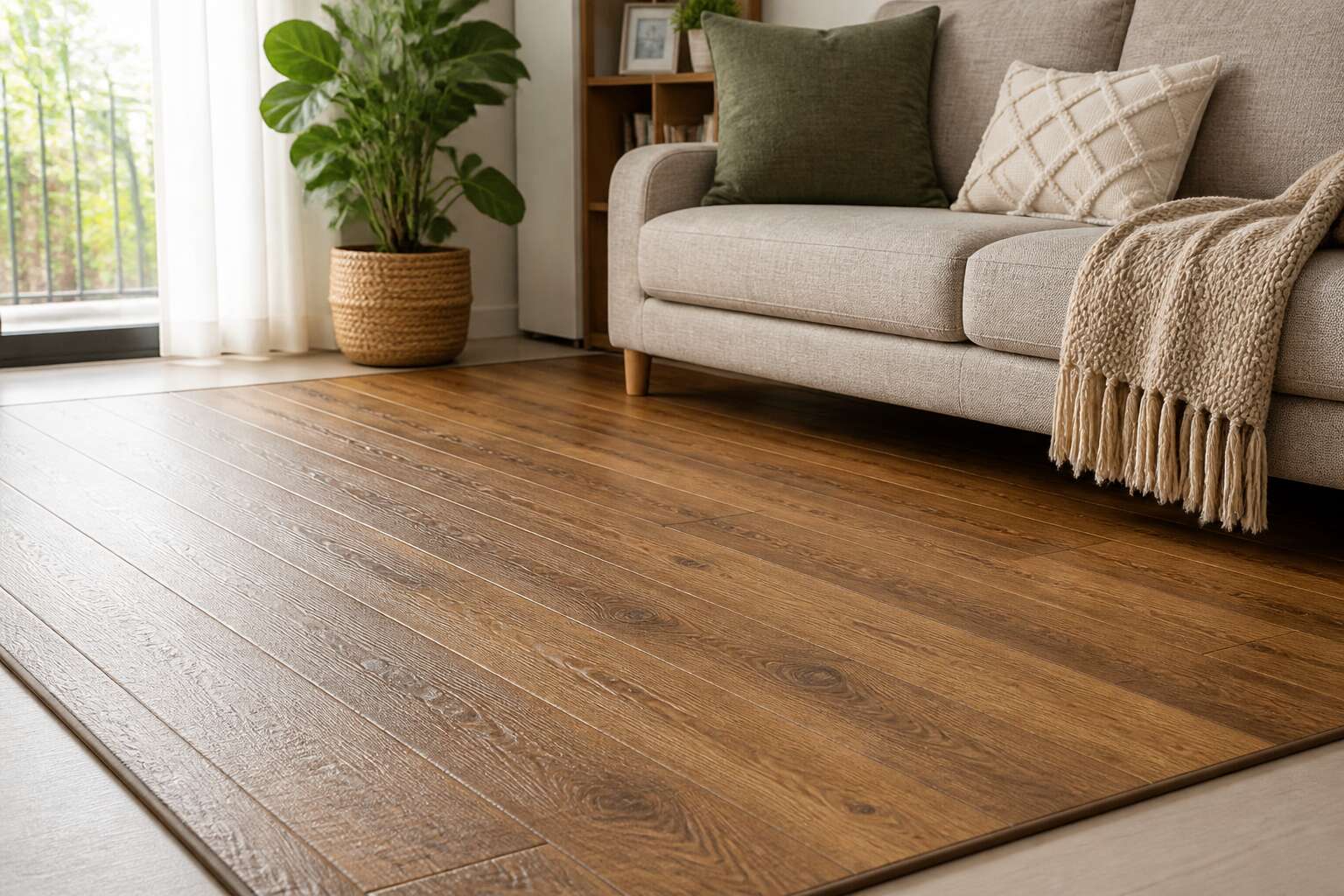
A 2024 survey shows that 70% of South African shoppers prioritise texture in flooring. Here, rubber floor mats that look like wood deliver an experience far beyond simple visuals! The grain patterns are printed using multi depth embossing, where every ridge and recess aligns with the printed line.
Running your fingers across the mat reveals subtle annual rings, shallow knots, and tiny fissures. These textured surfaces offer dependable traction in high traffic areas. A convincing design often includes:
- Randomised grain repetition
- Dual tone shading across each plank
- A soft, matte finish that absorbs glare
When this level of detail is achieved, rubber floor mats that look like wood become indistinguishable from real timber. Light and shadow across the embossed surface create a quiet realism that transforms any room.
Color Variations: From Oak to Walnut and Beyond
South Africans choose floor colours with the same seriousness they reserve for braai meat. Medium rare or well done, it matters. Rubber floor mats that look like wood now arrive in shades that make timber merchants squint twice. Oak remains the crowd pleaser, a honeyed tone that hides dust like a champion. Walnut offers a darker, moodier temperament, useful for disguising muddy footprints. Between those extremes lies a spectrum of teak, ash, and even charcoal finishes.
The selection process is straightforward:
– Survey the room’s natural light at different hours
– Compare undertones against existing furniture
– Estimate how many feet will trample the surface daily
Rubber floor mats that look like wood deliver these tones without splinters, termite inspections, or the annual polish ritual. That is the real trick.
Plank Widths, Tile Sizes, and Surface Finishes
Plank width decides how a room is read before any furniture arrives. Wide planks stretch small lounges. Narrow planks suit passageways. For rubber floor mats that look like wood, the moulding process delivers both formats without waste. Tile sizes matter too. Large square tiles create a clean, modern grid. Smaller tiles set a busier rhythm underfoot.
Surface finishes decide how the mat feels underfoot. A matte finish stays quiet and hides scuffs. A brushed texture mimics hand-scraped timber. Glossy finishes exist, but they reveal footprints quickly. I find them impractical.
The laying pattern shifts a room’s visual weight. Herringbone layouts add energy. Straight planks keep things calm. The area size changes how each format reads:
- Wide planks dominate in open-plan lounges
- Narrow strips appear more often in compact flats
- Textured surfaces wear better near entrances
Rubber floor mats that look like wood handle these demands without swelling or warping.
Matching Rubber Flooring with Interior Design Styles
The architectural character of a room determines what its floor must say. Cape Dutch homes with gabled lines ask for something that honours their heritage. Industrial lofts in Maboneng require a rougher texture. Rubber floor mats that look like wood adapt to both without compromise.
Vinyl and laminate once held the market’s attention, but they lack the tactile honesty of rubber. Matching rubber flooring with interior design styles begins with a study of the room’s dominant materials. Brick walls and exposed steel suit walnut tones. White minimalism calls for pale ash. I find this pairing exercise more revealing than any colour chart.
The following elements guide your choice:
1. The room’s existing material palette
2. Natural light direction and intensity
3. Furniture profiles and upholstery textures
When the match is correct, the floor settles into the scene. When it fails, the eye catches it every time. Rubber floor mats that look like wood earn their place because they respond to the room’s needs rather than dictating them.
Practical Benefits That Outperform Hardwood
Waterproof and Moisture-Resistant Construction
Few things feel as unsettling as watching a spill seep into a beautiful floor. Hardwood may offer warmth, but it holds a vulnerable secret. Moisture is its enemy. Rubber floor mats that look like wood eliminate that concern entirely, offering a waterproof barrier that standard timber cannot match.
This isn’t about a simple surface coating. The material composition means liquid sits proudly on top, waiting for a cloth, never penetrating the core. In coastal regions with high humidity or busy family kitchens, this moisture-resistant construction provides a peace of mind that timber simply cannot. Mould and mildew lose their breeding ground, which is a significant advantage for asthmatic households.
– The planks do not swell, warp, or cup.
– Seams remain tight without adhesive failure.
– Cleaning requires no special oils or sealants.
– The surface dries quickly after mopping.
Water from pot plants, muddy dog paws, or a forgotten ice cube melt leaves no trace. Every day, this flooring endures what would ruin a natural wood floor. It stands up to the steam from a kettle and the splashes from a washing machine. This resilience makes it an ideal candidate for homes across South Africa, from the damp coastal air of Durban to the drier Highveld climate. The long term value becomes obvious the moment you view rubber options for sale and realise you are buying durability, not just aesthetics.
Impact Absorption and Comfort Underfoot
Standing on wooden floorboards for hours sends a dull ache through the legs. The human body was not designed for prolonged contact with unyielding surfaces. Rubber floor mats that look like wood introduce a yielding quality that hardwood cannot offer, absorbing the shock of each step and redistributing pressure across the foot.
The elastomeric composition creates a subtle give that reduces joint strain. For anyone who works in the kitchen or stands at a workbench, this translates into real comfort by the end of the day. Consider the practical differences:
- A dropped glass has a chance of surviving the impact.
- Footstep noise diminishes, making multi-storey homes quieter.
- Standing fatigue lessens noticeably after prolonged periods.
This combination of resilience and bodily comfort makes rubber floor mats that look like wood a sensible choice for South African homes.
Slip Resistance for Safety in High-Traffic Areas
Hardwood floors turn hazardous the moment water, oil, or humidity touches their surface. Rubber floor mats that look like wood offer a coefficient of friction that hardwood cannot match. In a busy South African household, the passage between kitchen and living area sees constant movement, often with wet shoes after summer rain.
The textured surface grips both soles and bare feet, reducing the risk of falls. This is no minor concern! Falls remain a leading cause of household injury, particularly for older residents.
Consider what this safety margin delivers:
- Carrying a boiling pot across the kitchen becomes less precarious.
- Children can run through the hallway without sliding.
- Guests in heels or leather-soled shoes stay steady.
High-traffic areas demand more than aesthetic appeal. Rubber floor mats that look like wood provide dependable footing where hardwood fails.
Sound Dampening and Acoustic Insulation Properties
Anyone who has lived in a house with hardwood flooring knows the echo. Every footstep announces itself. Every dropped spoon clatters loudly. In South African homes, where open-plan living is common, this noise carries from one end of the house to the other. Rubber floor mats that look like wood change that entirely. The rubber core absorbs impact sound rather than amplifying it.
Consider what this means in practical terms. A child doing homework in the study no longer hears every movement in the kitchen. A person watching television at a normal volume does not need to compete with the clatter of the passage. The acoustic insulation properties of rubber outperform hardwood in measurable ways. Decibel levels drop noticeably when rubber floor mats that look like wood replace timber underfoot.
The social benefit matters too. Conversations continue uninterrupted. A late-night glass of water does not wake a sleeping partner. The quiet becomes something you notice only when it returns.
Scratch, Stain, and Dent Resistance for Daily Wear
Hardwood floors are unforgiving. A dropped key can carve a lasting groove. Scratches appear from nowhere; stains set in overnight; dents mark where heavy objects fell.
Rubber floor mats that look like wood change the equation. The top layer absorbs sudden impacts and sliding forces that permanently scar timber. A pot clatters onto the kitchen floor; the rubber flexes beneath itand springs back. Muddy boots track through the passage;a quick wipe removes the evidence. Sofa shifts during cleaning;no gouge remains.
Consider the daily tests rubber handles with ease:
- Dropped utensils leave no trace of impact.
- Pet nails never dig deep furrows.
- Wine, coffee,and oil wipe away without permanent staining.
With hardwood, you must remain vigilant. With rubber, you simply live. In a South African home, where braais and busy weekends are the norm, this distinction matters. You do not tiptoe around a floorthat resembles wood but withstands real living.
Hypoallergenic and Easy-to-Sanitize Surface
Every home harbours its invisible inhabitants. Dust mites, pollen, the microscopic detritus of daily life. Hardwood, for all its beauty, collects these particles in its grain and crevices. Rubber floor mats that look like wood refuse to play host. Their seamless surface leaves no sanctuary for allergens.
Consider the ritual of cleaning. A damp mop glides across the rubber, lifting grime without chemical concoctions. No waxing. No oils. No sanding down years of wear. I have watched homeowners scrub hardwood until their arms ache, only to see stains linger. With rubber, a single pass suffices!
For those with asthma or sensitive lungs, this matters profoundly. The floor beneath your feet does not collect what you breathe. When highveld winters drive families indoors, the air you breathe is shaped by the surfaces around you. A rubber floor mat that looks like wood offers a reprieve.
Installation Methods and Ongoing Maintenance
Interlocking Tiles vs. Adhesive-Backed Planks
The installation method for rubber floor mats that look like wood shapes your long-term experience. Interlocking tiles click together without glue, forming a floating surface that accommodates minor subfloor imperfections. Damaged sections lift and swap in minutes. Adhesive-backed planks require a spotless, level base. They bond permanently, creating a seamless appearance but complicating future adjustments.
Maintenance routines remain similar for both. Sweep frequently to remove grit. Damp mop using a pH-neutral cleaner. Avoid steam mops and solvent-based products, since these degrade the rubber compound over time.
A quick comparison:
– Interlocking tiles allow targeted replacement of worn areas
– Adhesive-backed planks offer a more uniform finish but no easy removal
Your floor’s condition and tolerance for permanence should guide the decision for rubber floor mats that look like wood.
Subfloor Preparation and Surface Requirements
The subfloor remains the unseen foundation of any installation. Whatever lies beneath will eventually surface through rubber floor mats that look like wood, whether through a shifting seam or a silent undulation. Concrete must be fully cured, level, and dry. Wooden subfloors demand their own ritual. Protruding nails and screws must be countersunk, since any protrusion will press through the rubber within weeks.
Prepare the surface with deliberate care. Grind down high spots. Fill depressions with a suitable compound. The accepted tolerance is 3 millimetres over a 3 metre span. Dampness is the enemy. A moisture barrier may be required for concrete slabs in wetter regions of South Africa.
Common subfloor requirements:
- Clean, dust-free surfaces
- Dryness below 4.5% moisture content for wood
- No cracks or expansion joints without proper covering
A pristine base allows rubber floor mats that look like wood to perform as intended. Ignore preparation and the failure will be slow, patient, and permanent.
DIY Installation Feasibility and Common Pitfalls
The first hour of any installation will tell you everything about the person holding the roller. Rubber floor mats that look like wood demand a simple ritual: peel, press, and roll with even pressure. South African homes, with their temperamental humidity, require a 24 hour acclimatisation period before fitting. Skipping this is the first compromise.
DIY installation is feasible for the orderly. Your tools are modest: a tape measure, a sharp knife, and a hand roller. The common pitfalls deserve a catalogue:
- Forget the 5 millimetre expansion gap at the walls and summer heat will buckle your seams.
- Use a heavy appliance to press the planks and you will crush the backing.
- Start in a doorway and every alignment error will compound across the room.
Ongoing maintenance is a quiet routine. Sweep weekly to remove the grit that Karoo winds smuggle indoors. Damp mop with a neutral cleaner, and avoid steam mops that soften the adhesive. Treat rubber floor mats that look like wood with this modest respect and they will keep their composure through years of dinner parties and dogs.
Daily Cleaning Routines and Approved Products
Installation methods follow the room’s geometry. Large open areas respond well to a staggered plank pattern. Smaller spaces benefit from starting at a straight wall and working across. Rubber floor mats that look like wood hide minor subfloor undulations better than laminate. A quality underlayment still matters for true flatness.
Daily cleaning stays within a modest routine. A dry microfiber mop handles most dirt. Damp mopping works, but keep water minimal. The approved product list is mercifully short:
- Neutral pH cleaners diluted per the manufacturer’s instructions
- Isopropyl alcohol solutions for sticky residue
- Specialised rubber floor care products for periodic renewal
Citrus-based cleaners and bleach degrade rubber surfaces. Steam mops force moisture into seams. A weekly sweep catches embedded grit that damages surface texture. This routine keeps rubber floor mats that look like wood presentable for years.
Repairing Damaged Sections and Replacing Tiles
Ninety percent of rubber floor repairs involve one damaged plank and not the full installation. Rubber floor mats that look like wood tolerate this intervention gracefully. The interlocking edges release with a flat pry bar, while adhesive-backed planks need a heat gun to soften the bond.
I always tell clients to order ten percent extra during installation. Rubber cures in batches, so colour shifts slightly between production runs. Keep spares flat in a cool, dark space. Match the new plank against the old under natural light. For rubber floor mats that look like wood, a mismatched sheen is more noticeable than a mismatched tone.
- Surface scratches buff out with a fine abrasive pad
- Deep gouges warrant full replacement
- Lifted seams indicate subfloor issues
- Discoloured tiles clean first, then judge
Tile replacement follows the same ritual. Remove the damaged piece slowly. Patience preserves the surrounding planks and their locking mechanisms.
Longevity Expectations and Warranty Coverage
Installation methods determine how long rubber floor mats that look like wood will serve. A properly clicked interlocking system stays flat for years. Adhesive-backed planks require a clean subfloor, but once set, they resist shifting. Both approaches handle South African temperature swings without drama.
Longevity expectations hinge on traffic levels. Residential rooms often deliver fifteen years of service. Commercial corridors compress that figure to seven or eight. Warranty coverage mirrors these realities. Most manufacturers provide five to ten year protection, with exclusions for static loads and aggressive solvents.
- Wear layer thickness dictates long term durability.
- Subfloor moisture affects adhesive bond life.
- Direct sunlight degrades some surface finishes.
Ongoing maintenance remains simple. Sweep regularly, mop occasionally, and skip abrasive pads on textured finishes.
Cost Comparison and Long-Term Value
Upfront Pricing vs. Solid Hardwood and Engineered Wood
Purchasing flooring is an act of faith in the future. Solid hardwood entices with its status, yet the initial quote can be staggering. Engineered wood offers a middle path, but both pale when measured against the true cost of ownership for rubber floor mats that look like wood. Your bank balance feels the difference immediately, as the rubber option typically demands a far smaller deposit.
However, the real financial schism appears over time. Hardwood demands refinishing, sanding, and sealing, expenses that recur every few years. Engineered wood, while cheaper initially, can delaminate in damp environments. The rubber alternative shrugs off the daily assaults that scar timber. Consider the hidden costs embedded in natural wood ownership:
– Specialized cleaning agents for timber
– Professional sanding and re-oiling services
– Climate control to prevent warping
– Periodic replacement of damaged planks
Each expense accumulates, quietly eroding your initial savings. The visceral appeal of genuine grain is potent, but the psychological weight of future expenses becomes a heavy burden. Many South Africans choose rubber for the unshakeable peace of mind that comes from predictable, minimal upkeep. When you calculate the total rand spent over a decade, rubber floor mats that look like wood do not just compete, they triumph, leaving solid wood as a costly indulgence and engineered alternatives as a fragile compromise. Choose the path of resilience.
Comparing Costs with Laminate and Luxury Vinyl Planks
Laminate flooring entices with its modest price. Luxury vinyl planks counter with waterproof promises. Yet both carry expenses that reveal themselves after installation. Coastal humidity makes laminate cup and swell. Luxury vinyl frequently demands subfloor levelling before a single plank rests in place.
The decisive measure is cost per year of service. A decade of ownership reveals the divergence:
- Laminate requires replacement after moisture damage or surface wear
- Luxury vinyl planks need adhesives and periodic seam resealing
- Rubber floor mats that look like wood require only mild detergent and a mop
Priced in rand, the rubber option avoids the recurring outlays that laminate and vinyl quietly accumulate. The initial estimates appear similar, yet the arithmetic of ownership tells a different story.
Lifecycle Cost Analysis: Repairs, Refinishing, and Replacement
Even after that decade, the true divergence appears in the repair ledger. Rubber floor mats that look like wood sidestep the three-headed monster of floor ownership: repairs, refinishing, and replacement. Laminate cannot be refinished, only replaced, and often in messy full-room batches. Luxury vinyl requires seam resealing and adhesive reapplication, a quiet tax paid every few years. The rubber option, by contrast, offers a maintenance profile that borders on neglect:
- No sanding, sealing, or recoating ever
- Damaged tiles pop out individually without disturbing neighbours
- Replacement planks cost a fraction of the initial installation
Run the lifecycle cost per square metre in rand across ten years and the arithmetic becomes lopsided. Dents that would scar traditional flooring simply bounce back. The recurring outlays that laminate and vinyl accumulate never materialise. That, not the sticker price, is what ownership truly costs.
Resale Value and Perceived Quality for Property Owners
The first thing a buyer notices after the front door closes is the floor. For property owners balancing installation costs against future returns, rubber floor mats that look like wood present an unusual arithmetic. Hardwood elevates perceived value but demands constant investment. Laminate reads as compromise. Rubber offers practicality without sacrificing the visual warmth buyers crave.
Resale value depends on perceived quality, a compound of texture, colour depth, and how the surface responds underfoot. The quiet give of rubber, its resistance to the marks of daily life, registers as durability. Buyers may not name it, but they feel it.
Property owners in Johannesburg or Cape Town can reasonably expect:
- A floor that photographs well for listings
- A surface that neutralises the ‘cheap renovation’ stigma
- A product that holds its appearance through show days
The perceived quality does not diminish over time. In my experience, that is where the value settles.
Ideal Spaces and Real-World Applications
Residential Favorites: Kitchens, Basements, and Home Gyms
South African kitchens take a beating no hardwood deserves. A dropped jar of atchar, a splatter of braai marinade, the dog’s enthusiastic greeting after rain. Rubber floor mats that look like wood handle these indignities while keeping the room photo-ready.
Basements, meanwhile, are the introverts of the house. Damp, ignored, occasionally flooded. Here, the mats perform a quiet service. Home gyms offer a third scenario:
- impact zones under a squat rack
- the stretch of a yoga mat without the slip
- a surface that forgives dropped dumbbells
Each room demands resilience with a straight face. These mats deliver both.
Commercial Durability for Retail and Restaurant Settings
Retail floors absorb a peculiar kind of punishment. Shopping carts veer. High heels tap out a rhythm. And every afternoon, a child drops a sticky treat. In these settings, rubber floor mats that look like wood handle the abuse while retaining the visual warmth of a timber floor. Restaurants present a different challenge. Hot oil splatters. Wine stains spread. The evening rush brings constant wiping.
Commercial durability demands more than surface appeal. These mats resist chemical assault from industrial degreasers and abrasion from scuffed boots. They remain intact where laminate buckles and tile cracks. For franchise owners and independent operators, the cost equation remains straightforward:
- Reduced replacement frequency in high-traffic zones
- Lower slip-related liability during wet service hours
- Consistent appearance after years of heavy use
Rubber floor mats that look like wood perform without demanding attention, which is exactly what a busy restaurant or retail floor requires.
Healthcare, Childcare, and Senior Living Environments
One in three adults over sixty-five falls each year. Rubber floor mats that look like wood give South African retirement centres a surface that prevents unsteady steps from becoming hip fractures. The resilience underfoot protects fragile bodies while the wood grain aesthetic keeps the space feeling like home.
Childcare environments demand flooring that survives spilled juice and paint water. The cushioned layer breaks toddler tumbles, while the antimicrobial surface resists the bacteria that flourish in creche playrooms. I have watched these floors endure daily steam cleaning in Johannesburg facilities without losing their timber appearance. They simply hold up!
Senior living staff value what these mats refuse to absorb. Spills stay on the surface. Noise quietens. Germicidal cleaners strip nothing from the finish.
Garage and Workshop Floors with a Wood-Inspired Look
Garage floors take abuse. Car batteries leak acid. Grease drips from engines. Tools fall from workbenches. A wood-inspired rubber surface meets these challenges with quiet resilience. The textured layer grips soles even when oil film is present.
Workshops in Johannesburg suburbs use these mats to transform cold concrete into a warmer workspace. The timber effect masks the dirt between cleanings. That matters when you are crawling under a bakkie at 7 a.m. I have seen floors that looked respectable for years under this treatment.
The mats absorb vibration from power tools. Your neighbours hear less of your projects. Dropped spanners land with a dull thud instead of a loud clang.
Swapping a stained concrete slab for rubber floor mats that look like wood adds function without advertising itself. Visitors glimpse a handsome wood floor. You see a surface built for the work.
Outdoor Covered Patios, Porches, and Pool Surrounds
Covered patios, porches, and pool surrounds test flooring differently than interior rooms. Direct sunlight, rain blown sideways, chlorine, and bare feet all arrive at once. Rubber floor mats that look like wood tolerate these conditions. The planks keep their colour under UV exposure. The surface stays comfortable to walk on when the thermometer climbs.
A veranda in Pretoria or a braai area in Durban benefits from this flooring. I have seen it hold up through two rainy seasons. The mats handle the daily realities:
- Wet swimsuits and pooling water
- Sunscreen and insect repellent spills
- Heavy planters and furniture legs
Rubber floor mats that look like wood give a pool surround a finished appearance. The wood grain reads as intentional design, not utility flooring. Your guests will never guess what lies beneath their feet!
Temporary and Portable Solutions for Events and Rentals
The event industry thrives on impermanence, yet clients demand permanence in appearance. A wedding on a Wine Estate or a product launch in a Johannesburg warehouse shares a common challenge: the floor must transform instantly and vanish without a trace. Rubber floor mats that look like wood answer this call with singular efficiency. They lay over concrete, paving, or even tatami in minutes. When the function concludes, they roll up with no damage to the substrate beneath. This portability makes them a preferred choice for rental companies who refuse to compromise on aesthetics.
Temporary spaces often suffer the worst abuse. Think of a five-day exhibition or a festival where the crowd arrives in waves. The mats face grinding grit and spilled beverages, and then they must look pristine for the next showing. The wood grain pattern masks scuffs between cleanings. The surface retains its colour, regardless of how many boots trample it. Consider the practical uses:
– Corporate pop-up showrooms
– Wedding receptions on lawns
– Concession stands at sporting events
– Film and television set dressing
A rental inventory benefits from a flooring solution that suits multiple venues without requiring permanent commitment. Rubber floor mats that look like wood offer that adaptability. They fold and store flat, freeing up valuable logistics space. The tactile warmth of the wood grain softens halls and barns, creating an intimate atmosphere for gatherings. For the rental professional, these mats represent a low-risk asset that delivers high visual return. They transform a blank canvas into a finished room, quickly and cleanly, and they disappear just as fast, leaving only the memory of a polished occasion.
Choosing the Right Wood-Look Rubber Flooring
Thickness and Density Ratings for Different Uses
Selecting the correct thickness for rubber floor mats that look like wood depends on the load they must bear. For residential living spaces, a 4mm to 6mm profile delivers adequate cushioning without raising the floor height excessively. Home gyms require more, so an 8mm to 10mm plank with a high density rating absorbs dropped dumbbells without transferring shock to the subfloor.
Commercial settings such as retail or restaurant environments need dense, thick options. I have seen 4mm planks fail under workshop loads. The most resistant specifications include:
– 6mm to 8mm planks for moderate foot traffic with heavy trolleys.
– 10mm to 12mm tiles for workshop benches and machinery areas.
– Rubber densities above 0.8g/cm³ for rolling loads.
A denser plank resists indentation from furniture and tools, while softer variants prioritise standing comfort. The relationship between thickness and density shifts with each room’s demands.
Eco-Friendly Options: Recycled Rubber and Sustainable Sourcing
South Africa generates roughly 11 million waste tyres each year, and a growing share now becomes flooring. Selecting rubber floor mats that look like wood made from recycled rubber diverts this waste stream directly from landfills. The crumb retains its shock absorbing properties while reducing demand for virgin polymers.
Sustainable sourcing extends beyond the base material. Verify that any virgin rubber comes from plantations certified by the Forest Stewardship Council or similar bodies. Local manufacturing also shortens supply chains and cuts embedded carbon.
- Recycled content percentages clearly stated on product specifications
- Third party certifications such as GreenTag or SABS Eco Mark
- Manufacturer take back programmes for old flooring at end of life
Even with these environmental credentials, rubber floor mats that look like wood maintain convincing grain texture and colour depth. You receive a surface that answers both aesthetic and ethical demands without compromising either.
Safety Certifications, Fire Ratings, and VOC Emissions
Somewhere between the showroom gloss of engineered wood and the industrial honesty of a workshop floor lies a certification headache waiting to happen. The market for rubber floor mats that look like wood has grown fast enough that manufacturers now compete on safety claims, not just aesthetics. That competition works in your favour, provided you know which documents actually matter.
Fire ratings are where the rubber really meets the road. South African regulations treat flooring with appropriate seriousness, and the SABS 0177 standard remains the benchmark for flame spread and smoke generation. Products that pass this test resist ignition and slow the spread of flames, which matters in both residential corridors and commercial escape routes. Do not accept a verbal assurance here. Ask for the test report and read the numbers.
VOC emissions tell a different story about occupant health. The crumb rubber base typically performs well, but adhesives and backing layers can introduce volatile organic compounds that off-gas for weeks. Look for floor systems that carry the GreenTag certification or independently verified emission limits below 100 micrograms per cubic metre. The olfactory test also earns a place in your decision process.
– Ask suppliers for the actual fire test certificate, not a summary
– Confirm the product carries a written emission compliance statement
– Request slip resistance data measured with both wet and dry testing methods
– Verify that fall impact ratings match the intended installation space
A lingering chemical smell after installation suggests the product is releasing compounds you do not want inside your home. Quality rubber floor mats that look like wood arrive with minimal odour and maintain that state over years of service. The safety documents protect you legally and practically, covering liability concerns while ensuring the surface performs under duress.
Top Brands and Key Quality Indicators to Look For
The market has reached a point where dozens of brands produce rubber floor mats that look like wood, but the visual similarity often masks significant differences in durability and performance. Established manufacturers with dedicated rubber compounding facilities typically deliver consistent density and thickness, while newer entrants may source variable batches that affect long-term behaviour.
When evaluating suppliers, examine the warranty terms closely. A brand that offers a ten year commercial warranty demonstrates confidence in its bonding agents and surface treatments. Products that show visible fibre release or surface bloom within the first year indicate poor curing processes. The best way to assess quality is to request physical samples and subject them to your own stress tests.
– Measure the planks with callipers to verify stated thickness tolerances
– Scratch the surface with a key and observe whether marks disappear with rubbing
– Check the backing layer for evenness, as lumps indicate poor manufacturing control
– Ask about the source of the crumb rubber, since tyre quality varies by region
Reputable local suppliers in South Africa maintain stock continuity across batches, ensuring that future repairs match the original installation. International brands may offer superior colour depth, but logistics and replacement availability require consideration. The tactile response matters too. Run your hand across the surface and compare the grain texture between brands. Deeper embossing hides foot traffic patterns better, while shallow textures tend to polish down over time. The right choice balances aesthetic appeal with structural integrity that survives daily use.
0 Comments