
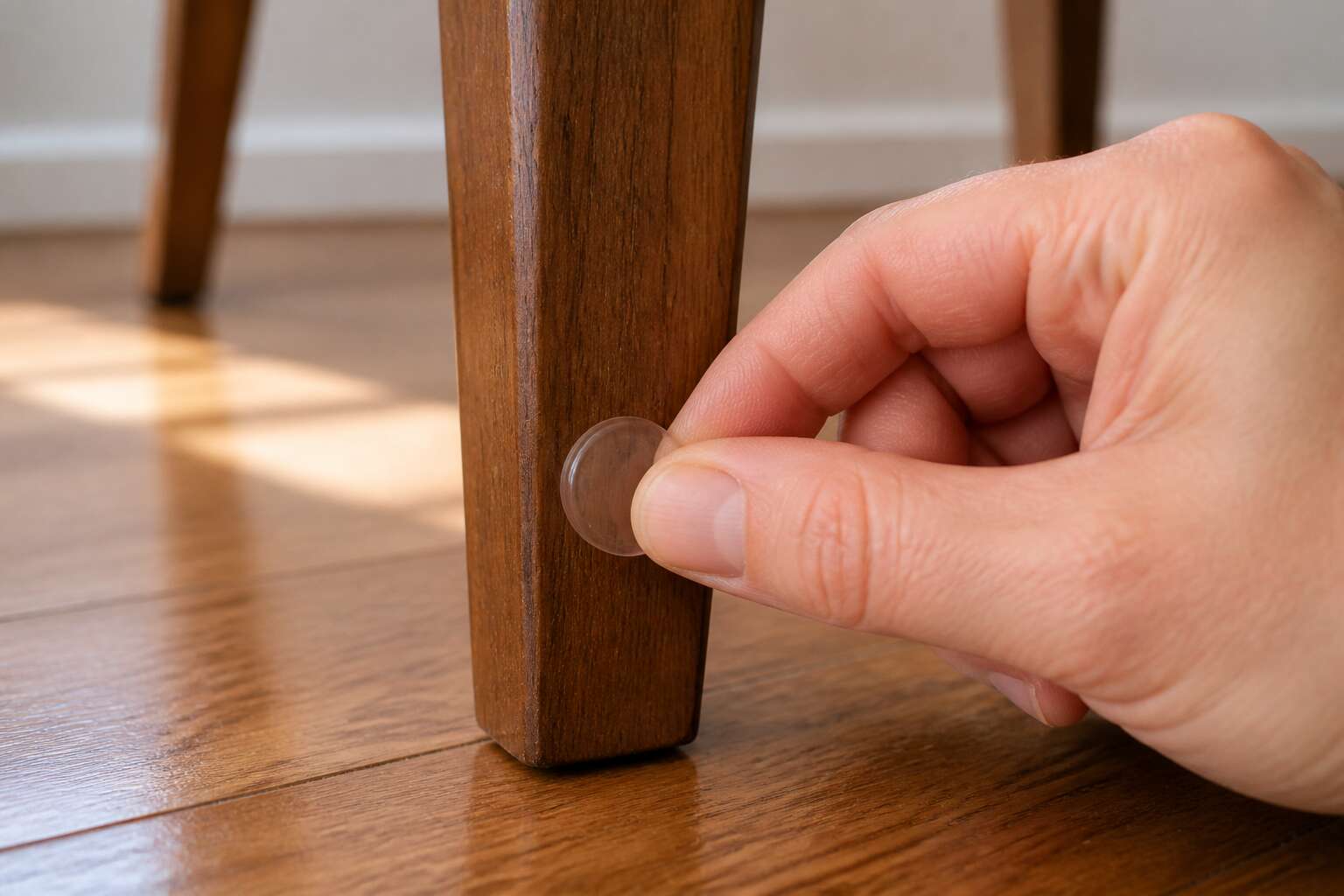
Why Rubber Floor Grips Are Essential for Furniture Protection
Prevent Scratches and Scuffs on Hardwood Floors
One careless slide of a dining chair can leave a permanent scar on a hardwood floor. That is why rubber floor grips for furniture matter more than they seem. They do more than keep legs from wobbling; they create a cushion between the weight of your furniture and the vulnerable surface beneath.
Think about the pieces that move the most:
- Dining chairs that are pulled in and out every day
- Bar stools that swivel and shift
- Heavy sideboards that get dragged during cleaning
Each of these can scrape the finish if left unprotected. Rubber grips hold the piece steady while absorbing impact, so you prevent scratches and scuffs on hardwood floors without changing how your home looks. The material does not compress like felt, so the floor stays smooth for years.
Reduce Noise from Sliding Chairs and Tables
A chair leg dragged across ceramic tile does not simply make a noise. It transmits vibration through the entire structure, loosening screws and stressing glue joints over time. Rubber floor grips for furniture interrupt this process. The rubber deforms slightly under load, holding the leg in place while dissipating the energy that would otherwise travel upward into the frame.
We have all winced at that harsh scrape in an otherwise quiet room. The acoustic difference these grips make is immediate. A dining room fitted with rubber floor grips for furniture loses its percussive quality. Conversations continue uninterrupted while guests push back from the table. For open-plan homes, common in South African design, where living spaces flow into one another, this matters even more.
Without them, consistent wear appears in predictable places:
- Pitted grooves in vinyl flooring
- Stress fractures in grout lines
- Loosened joints in chair frames
Stabilize Furniture on Tile and Laminate Surfaces
Tile and laminate are unforgiving in a specific way. They resist flexing, so a chair with a millimeter of fault rocks with every shift in weight. Rubber floor grips for furniture interrupt that cycle. They compress slightly to match the leg’s angle, creating friction that holds the piece still.
That friction is the core of protection. A heavy dining chair slides sideways by a hair each time you sit down. Over months, that micro-movement erodes the leg’s finish and leaves dents in the flooring. A grip eliminates the slide. For a sideboard, the weight alone is a problem. Without grips, the base can crush grout or press a permanent depression into laminate. Three failures become common without them:
– Chair legs ground down by repeated shifts.
– Table bases that gradually lean forward.
– Cabinet doors that eventually fall out of alignment.
Rubber floor grips for furniture solve all of these. They distribute the weight across a wider footprint and keep the frame square.
Types of Rubber Floor Grips for Furniture
Adhesive Felt Pads with Rubber Backing
Most furniture spends its entire life resting on four small points. That is why adhesive felt pads with rubber backing remain a popular choice. The felt layer moves freely across floors, while the rubber underside locks into position. This pairing works well for chairs, desks, and side tables.
These pads come in several configurations. Choose based on the furniture footprint:
- Round pads for circular legs
- Rectangular strips for cabinet bases
- Square pads for flat feet
Some have a thicker felt core to absorb minor irregularities. Others use a slim rubber film for tighter clearance. I appreciate the peel-and-stick application, which takes seconds. When installed correctly, rubber floor grips for furniture reduce lateral movement without leaving residue.
Rubber Caps for Chair and Table Legs
Rubber caps for chair and table legs take a different approach to floor protection. Instead of a pad that rests beneath the foot, these caps envelop the leg completely. This design works well for metal, wood, or tubular frames where a slip-on solution is more practical. The snug fit holds the grip in place during movement, and the thick rubber absorbs pressure from daily use. Some caps include an interior ring for a tighter hold on tapered legs. Others are open-ended to accommodate longer posts.
Popular cap configurations include:
– Push-fit caps for standard round legs
– Tapered caps for angled or flared furniture
– Reinforced caps with extra sidewall thickness for heavy pieces
Rubber floor grips for furniture in cap form also handle outdoor conditions. They resist moisture, stay flexible in heat, and remain useful on patio chairs and garden tables.
Self-Adhesive Rubber Bumpers for Furniture Feet
Roughly 70% of furniture damage stems from a persistent sliding motion rather than a single heavy impact. This subtle friction is where self-adhesive rubber bumpers for furniture feet reveal their true utility. These flat, adhesive backed discs do not rely on mechanical force. They use a chemical bond with the furniture’s surface, transferring the burden of grip directly to the pressure sensitive adhesive layer. This makes them an ideal choice for delicate items where drilling or screwing is not an option.
The application is almost instantaneous; peel, place, and press. This immediacy is their primary virtue. They excel on lightweight pieces like coasters, vases, or occasional chairs where the load is minimal. They provide a quiet, stable base, preventing the dreaded ceramic-on-glass screech. For users in South Africa, where high humidity can degrade adhesives, a quality rubber formula with a durable acrylic core is essential.
Consider these points when selecting them:
– The adhesive’s shear strength is critical for withstanding lateral force.
– A larger diameter distributes weight more effectively, preventing deep indentation in timber floors.
– Pure rubber offers more grip than silicone or EVA, especially on smooth, glazed tile.
The rubber floor grips for furniture in this category operate on a principle of non-intrusion. They protect the floor without altering the furniture’s structural integrity. They are the silent guardians of polished surfaces, absorbing the micro-shocks of daily life. Their humble design belies a sophisticated function, offering a rapid, clean solution for those seeking immediate peace of mind.
Grip Tape Strips for Custom Furniture Configurations
Some furniture refuses to cooperate with round bumpers. A long bookshelf or a custom-built desk console presents a different challenge. This is where grip tape strips earn their place. Cut to length, they adapt to any configuration. The adhesive layer runs the full length, so there are no weak points where a piece lifts and rattles.
Consider these situations where tape strips outperform their circular cousins:
- Legs with flat, wide bases like entertainment units
- Furniture with continuous runners instead of individual legs
- Shelving units that span irregular floor sections
The tape offers a lower profile than individual pads. It sits flush against the surface. For furniture in South African homes with textured finishes, the pressure-sensitive adhesive bonds firmly where a small disc might not cover enough area. These rubber floor grips for furniture sacrifice nothing in grip while covering more ground. They suit the practical need for stability across an entire edge. When the configuration demands a custom length, rubber floor grips for furniture in strip form deliver exactly that.
Interlocking Rubber Mat Tiles for Large Appliances
A washing machine that shudders across the kitchen floor during the spin cycle is a familiar irritation. Interlocking rubber mat tiles offer a different approach to this problem. Instead of individual pads or strips, these tiles create a continuous platform beneath the appliance. The edges click together firmly, forming a stable base that absorbs vibration and prevents sideways drift.
- They cover the full footprint of large machines
- They handle heavy loads without compressing thin
- They can be trimmed to fit odd alcoves
These rubber floor grips for furniture work where point contact fails, because the interlocking design distributes the machine’s weight across the whole surface. The result is a quiet, stationary appliance and a floor that stays free of scuffs and pressure marks.
How to Choose the Right Rubber Floor Grips for Your Furniture
Consider Your Flooring Material and Finish
Choosing rubber floor grips for furniture often comes down to a quiet variable: the coefficient of friction between rubber and your specific floor. A polished granite surface behaves differently from an oiled oak plank. The finish, whether matte or glossy, changes how tightly a grip holds.
For South African homes with screed floors or clay pavers, the texture matters more than thickness. A smooth floor calls for a softer compound. A rough surface needs a firmer edge.
Consider these factors when evaluating rubber floor grips for furniture:
- The Shore hardness rating, which indicates how much the rubber deforms.
- The floor’s porosity, since sealed finishes reduce suction.
- The presence of underfloor heating, which alters rubber elasticity.
Matching the grip to the finish prevents the furniture from drifting while allowing easy repositioning when you need to clean.
Match the Grip Size to the Furniture Leg Diameter
Measure the leg before you buy. A caliper gives the exact diameter, but a piece of string and a ruler works! The rubber floor grips for furniture must hug the leg without straining. A tight fit grips better, yet an overtight grip can split on a metal leg.
Consider the taper of the leg. Many South African chairs have legs that narrow toward the floor. If the taper is steep, a standard cap may sit crooked. Choose grips with a flexible lip that follows the curve.
Here is a simple way to check the fit:
1. Slide the grip onto the leg.
2. Lift the furniture an inch.
3. Shake gently. If the grip stays put, it matches.
That test saves you from a wobbling chair and a scratched floor. The right rubber floor grips for furniture turn a noisy dining room into a quiet one.
Evaluate Load-Bearing Capacity for Heavy Items
Heavy furniture crushes a weak grip! A loaded bookshelf or an oak table presses with hundreds of kilograms, so the rubber floor grips for furniture must hold their shape under sustained weight. Flimsy caps flatten or tear.
Evaluate the load-bearing capacity before buying. Check the durometer rating, which measures resistance to indentation. Examine the wall thickness and the base area; a wider footprint spreads the load. In South Africa, solid timber pieces often exceed standard ratings, so verify the manufacturer’s limit.
- The manufacturer’s stated maximum load per grip
- The combined capacity across all legs
- A 20 percent safety margin for dynamic stress
These rubber floor grips for furniture are rated for static loads, but real use involves pulling and shifting. A failed grip under a heavy cabinet causes scratches and a tipping hazard.
Determine the Right Adhesion Strength for Temporary or Permanent Use
Choosing the right rubber floor grips for furniture starts with accepting that adhesion strength is a compromise. A temporary grip must release cleanly, while a permanent one must resist years of thermal cycling. I have watched homeowners in Pretoria choose a heavy duty adhesive and then struggle to move a sideboard without splintering the wood base. The distinction matters more than the grip material itself.
Pressure sensitive adhesives work for items you rearrange monthly. They form a bond of only a few newtons per square inch. Permanent adhesives, like modified acrylics, cross link chemically after application. That changes the removal process entirely.
Ask yourself three practical questions before buying:
1. Will this furniture stay in one position for longer than two years?
2. Is the floor surface sealed with varnish or oil based coating?
3. Do you feel comfortable using a heat gun for future removal?
These rubber floor grips for furniture adhere based on the substrate’s porosity. A permanent bond on untreated wood becomes nearly impossible to undo. Choose temporary adhesion for rental properties where damage deposits are at stake. Choose permanent adhesion for pieces that anchor a room. The correct answer depends on your tolerance for risk, not on marketing claims.
Look for Non-Staining, UV-Resistant Rubber Compounds
South African sunlight is unforgiving. A rubber grip that survives a Johannesburg summer without turning brittle is worth the extra cost. Ordinary rubber compounds break down under UV exposure, leaving sticky residue on your floor and a crumbling pad on your furniture leg.
Non-staining compounds are equally important. Some rubbers contain plasticisers that leach out over time, especially on warm days. These oils seep into tile grout or laminate seams and are nearly impossible to remove. When you buy rubber floor grips for furniture, check the compound specification rather than the packaging photo.
- Look for EPDM or silicone based compounds with UV stabilisers
- Avoid recycled rubber blends that contain unknown fillers
- Test for staining by pressing the grip against a white ceramic tile for 48 hours
Rubber floor grips for furniture that resist UV and staining keep your floors intact while the grip does its job. Cheap compounds cost less upfront, but they leave behind a repair bill that far exceeds the saving.
Choose Between Clear, Brown, or Black Grips for Aesthetics
The transition between a furniture leg and the floor often goes unnoticed until it clashes. Clear rubber floor grips for furniture disappear against most surfaces, making them the quietest choice for glass, chrome, or pale wood. Brown grips echo the warmth of oak, mahogany, or teak, so they suit traditional dining suites and carved lounge pieces.
Black grips read as deliberate design elements. They anchor a chair or table with visible contrast, which works well in industrial settings with dark metal frames. For visual consistency, match the grip to the darkest tone in the room rather than the lightest.
- Clear grips are nearly invisible against white, pale, or glass surfaces.
- Brown grips blend with medium to dark wood tones.
- Black grips complement charcoal, matte black, or industrial interiors.
The wrong shade draws the eye to the floor line. The right shade makes rubber floor grips for furniture feel like part of the piece itself.
Step-by-Step Guide to Installing Rubber Floor Grips on Furniture
Clean the Furniture Legs and Floor Surface Thoroughly
Preparation occupies the first five minutes of installation and determines the next five years of hold. A single missed patch of polish can ruin the bond. Before pressing rubber floor grips for furniture into place, both the leg and the floor need scrupulous attention. Warm water with dish soap removes most household grime. Stubborn residue demands a commercial degreaser.
Here is a sequence that yields a reliable hold:
- Wipe the furniture leg with a lint-free cloth dampened in soapy water.
- Scrub the floor area with the same solution, working in concentric circles.
- Rinse both surfaces with a separate damp cloth.
- Allow thirty minutes of air drying. Moisture trapped under a grip acts as a lubricant, weakening the hold.
That final drying step is often rushed. I have watched installations fail because someone pressed the grip onto a damp surface. Rubber floor grips for furniture rely on friction against a clean, dry substrate. Patience here prevents a loose grip and a scratched floor next week.
Measure and Cut the Grips to the Correct Size
Once the cleaning ritual is complete, the next act begins with measurement. A soft tape measure wrapped around the leg at the point where rubber floor grips for furniture will sit reveals the exact diameter needed. Precision matters here. A grip that measures even two millimetres too wide will slide; one too narrow will strain and tear.
For legs with unusual profiles, square or tapered, trace the footprint onto the grip material using a marker. Cut with sharp scissors or a utility knife, following the traced line with a steady hand. Cut slightly larger than the trace, then trim inward for a snug fit.
- Mark the cutting line clearly before starting.
- Use a straight edge for square cuts.
- Trim in small increments to avoid overcutting.
Rubber floor grips for furniture accept minor adjustments, but aggressive cutting compromises the grip’s structural integrity. A measured approach rewards you with a stable chair or table and an unmarked floor.
Position the Grip and Press Firmly for Secure Adhesion
The true test begins once the cutting is complete. Align the rubber floor grips for furniture over the leg, ensuring the edges sit flush without folding inward. A crooked placement invites an eventual slip.
Press from the centre outward to expel trapped air. Use the heel of your hand and hold firmly for a solid ten seconds. This allows the adhesive to bond. A fleeting pat will not suffice. In a South African home, where a stoep chair meets quartz tile, this step separates a steady seat from a sudden departure across the room.
- Wipe the pressed surface with a dry cloth to remove residual dust.
- Check the alignment before releasing pressure.
Test the result with a gentle tug. A secure grip resists movement. If it shifts, press again, as rubber floor grips for furniture permit one or two re-applications before the adhesive weakens.
Allow Sufficient Drying or Curing Time
After pressing, the waiting game begins. The adhesive on rubber floor grips for furniture requires a quiet interlude of at least twelve hours before the piece moves back into service. This curing phase is not a suggestion; it is a chemical necessity.
During this window, keep the furniture upright and untouched. A chair leg nudged too early can shear the bond, leaving the grip curled and useless. In the coastal humidity of Durban, give it a full day. The moisture in the air slows the polymerisation.
- Resist the urge to test the grip with a wiggle.
- Keep the floor dry and free of cleaning agents.
- Allow airflow around the base of the leg.
Patience now saves you from redoing the task. The glue sets, but the strength builds slowly.
Common Mistakes to Avoid When Using Rubber Floor Grips
Installing Grips on Dirty or Greasy Surfaces
A contaminated surface is the leading cause of premature grip failure. When you install rubber floor grips for furniture onto a greasy leg, you are only attaching the grip to the grime. The actual wood or metal underneath never gets touched. This happens often in South African kitchens, where cooking oils and hand creams leave an invisible film that plain water will not remove.
A dry cloth over a dirty leg simply moves the grease around. You need a degreaser or methylated spirits to break down the residue. Then let the surface dry completely. Many people skip this step and wonder why the grips slide off within days.
Common contaminants that ruin adhesion:
- Furniture polish residue
- Cooking oil spray
- Hand lotion transfer
- Dust trapped in humidity
Even a thin layer of any of these will compromise the bond. Clean the leg properly, and your rubber floor grips for furniture will stay firmly in place for years.
Using Incorrectly Sized Grips That Leave Gaps
Using rubber floor grips for furniture that are the wrong size is a frequent error. A grip that is too small leaves a gap around the leg, so the furniture still wobbles, the floor still gets scratched, and the adhesive only bonds where it touches. A partial grip means partial holding power.
Some people measure once, cut wrong, and call it a day. Others refuse to measure at all and simply guess. This is how you end up with a dining chair that leans to one side.
Common size mistakes include:
- Using a cap meant for a thinner leg and hoping it stretches
- Buying the first pack on the shelf without checking the diameter
- Assuming all medium grips are the same across brands
A grip that is too large is just as troublesome. A loose rubber floor grip for furniture can slide off mid-conversation, usually right when you are trying to make an impression.
Neglecting to Replace Worn or Hardened Rubber
Rubber floor grips for furniture do not last forever. In South Africa’s heat, the compound can harden within eighteen months. A hardened grip loses its elasticity, turning into a rigid shell that no longer absorbs impact or grips the surface properly.
When the rubber becomes brittle, small cracks appear along the edges. The furniture starts to slide again, and the protective function disappears. Replacing these grips is not an optional task.
- Cracks along the edge of a grip indicate lost flexibility.
- A glossy sheen on the rubber means it has degraded from constant pressure.
- Hardened grips no longer compress under the weight of the chair.
Worn rubber also transfers marks onto light flooring. A fresh set restores stability without requiring new furniture.
Frequently Asked Questions About Rubber Floor Grips for Furniture
Can Rubber Floor Grips Damage Hardwood Floors?
Can rubber floor grips for furniture damage hardwood floors? It is a fair question, and the answer depends entirely on the compound. Quality rubber floor grips for furniture are formulated to be stable and non-reactive. They will not eat into a sealed hardwood surface. Cheap alternatives, on the other hand, can contain heavy plasticisers that migrate into the finish over time.
Here is what determines whether your floor stays pristine:
- The type of finish: oil based finishes are less reactive than certain water based lacquers.
- The rubber’s Shore hardness: softer grips deform and spread the load, avoiding concentrated pressure.
- The ambient temperature: excessive heat can soften the rubber and increase chemical migration.
I always advise testing a single grip on an inconspicuous spot first. Leave it for a week and inspect. This simple step tells you more than any product claim. In my experience, well-made rubber floor grips for furniture protect hardwood rather than harm it.
How Long Do Rubber Floor Grips Last?
Rubber floor grips for furniture are not immortal, despite what their optimistic packaging might suggest. In my experience, a decent set lasts anywhere from two to five years of daily use. The real variable is abuse. A heavy oak table dragged across rough tile will murder them far faster than a featherweight chair gliding on sealed wood.
Heat is the sneaky killer. That sun-drenched spot next to the sliding door? It bakes the rubber, turning it stiff and useless. You will know it is time when the grips feel hard under your thumbnail or leave crumbs when you move the leg.
- Cracking along the edges
- Loss of bounce when pressed
- A shiny, sticky residue on your floor
That sticky residue is the rubber breaking down chemically, not a mysterious floor curse. Check yours twice a year and you will likely replace them only when the seasons change your furniture arrangement anyway.
Are Rubber Grips Better Than Felt Pads?
Felt pads excel at letting a chair glide across a sealed wooden floor. Rubber floor grips for furniture excel at keeping a table rooted to one spot. That difference matters more than any marketing claim.
On tile or laminate, felt offers little resistance, which suits a dining chair you push in and out constantly. Rubber grips provide traction and reduce that annoying slide, but they collect dust and hair along their edges. In my experience, cleaning them requires more effort than wiping a felt pad.
Ask yourself how the piece will be used:
- Chairs that slide in and out daily stay easier with felt.
- Tables, dressers, and cabinets stay steadier with rubber.
Can I Use Rubber Grips on Carpeted Floors?
Short answer: yes, but the type matters. Rubber floor grips for furniture perform best on hard surfaces. A carpet’s pile absorbs pressure, which dulls the grip’s traction. The result is a table that still wobbles.
There are exceptions. Heavy furniture can press deep enough into the carpet for the rubber to catch the rug backing. Some manufacturers make grips with a spike or anchor specifically for carpeted floors. If you are unsure, test a single grip before committing. Rubber floor grips for furniture are not a one-size-fits-all product.
- Check whether your carpet is low-pile or high-pile.
- Look for grips labelled for carpet use.
- Watch for permanent dents in the pile.
In my experience, a felt pad with a rubber rim handles carpet better than a flat rubber disc. Choose accordingly.
How Do I Remove Rubber Grips Without Leaving Marks?
Removing rubber floor grips for furniture can be tricky, but it is manageable. Warm the grip with a hairdryer for ten seconds. The heat softens the adhesive without melting the rubber. Lift one edge with a plastic scraper, not a metal blade.
If a mark remains, rub it with a cloth dipped in cooking oil or eucalyptus oil. Both are gentle on timber and tiles, which matters for South African homes with sensitive finishes. Test on an unseen area first. For stubborn spots, a soft eraser lifts the residue.

0 Comments