
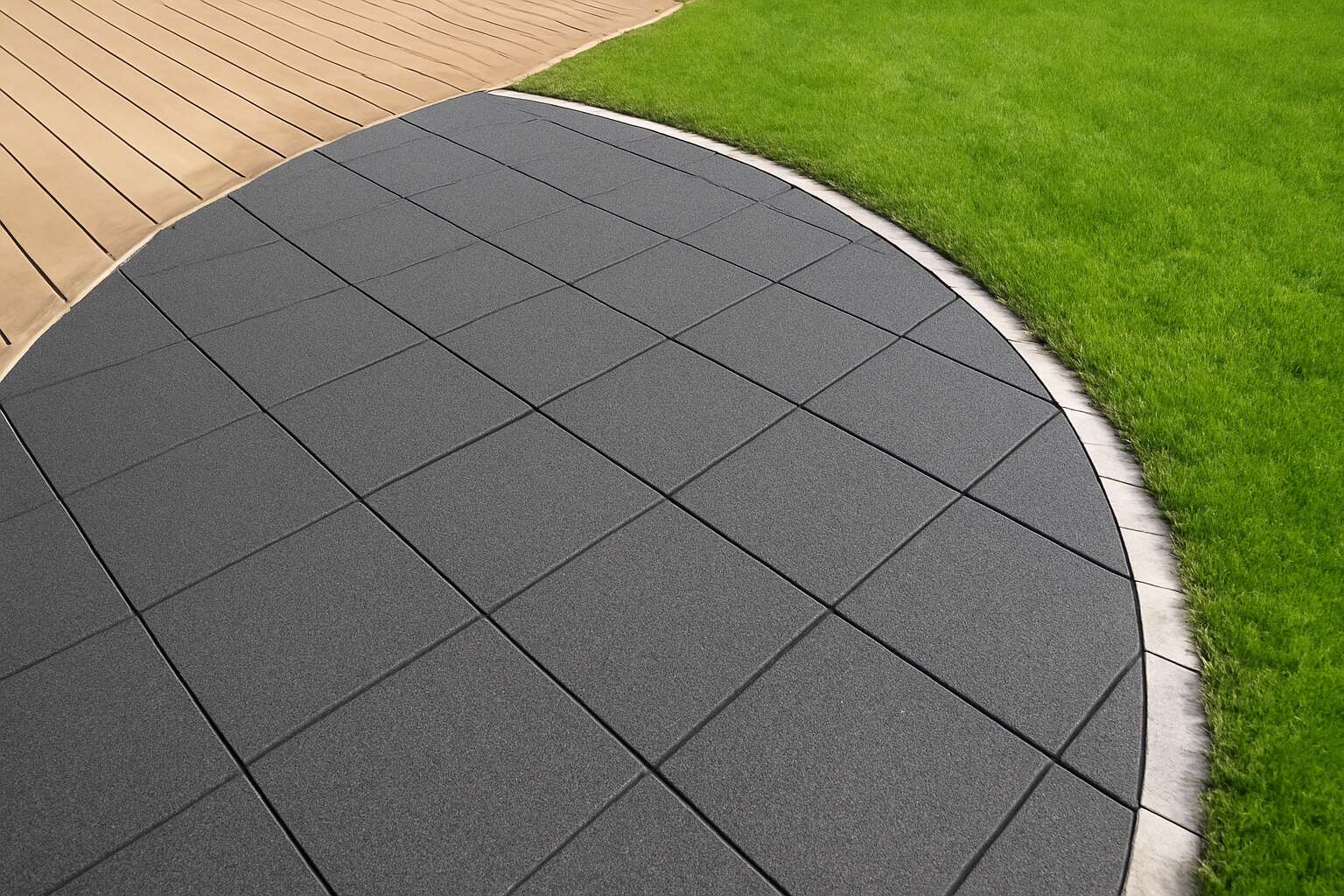
Edge finishing options for rubber tile installations
What edging means for rubber tile floors
Edge finishing isn’t flashy, but it’s the quiet conductor of safety and longevity. In busy SA spaces, a proper edge seal can extend rubber tile life by up to 30%, making installations look sharper and last longer!
Popular choices for rubber tiles edging include:
- perimeter edge strips for a flush border
- stair edging profiles to protect steps
- corner trims to define corners neatly
Edge finishes come in a range of trims—from color-matched rubber tiles edging to PVC, aluminum, or stainless steel profiles—that resist SA humidity and heat. They lock the perimeter, ease cleaning, and harmonize with walls and thresholds.
Common edging profiles for rubber tiles
Edge finishing quietly governs the life of a floor, and the numbers speak for themselves: careful attention to rubber tiles edging can extend life by up to 30% in busy SA spaces where wear is constant!
Options blend function with durability. Perimeter edge strips create a flush border; stair edging profiles cradle foot traffic; corner trims define geometry with quiet precision. Profiles come in color-matched rubber edging, PVC, aluminum, or stainless steel, chosen for humidity and heat resistance in South Africa.
- Perimeter edge strips for a flush border
- Stair edging profiles to protect steps
- Corner trims to define corners neatly
Material, color, and texture options
Edge finishing is more than décor; it’s the quiet guardian of a floor’s lifespan. In busy South African spaces, a smart rubber tiles edging choice can extend life by up to 30% thanks to better wear distribution and fewer edge failures. Material, color, and texture matter as much as profile. Opt for finishes that hold up under humidity and heat—color-matched rubber edges, PVC, aluminum, or stainless steel—so transitions stay seamless in high-traffic areas.
- Rubber edging
- PVC
- Aluminum
- Stainless steel
Texture choices range from matte to textured surfaces, offering grip and ease of cleaning. Color options can mirror branding or zones, helping wayfinding without shouting. With edge finishing, the floor communicates intention as much as function, shaping mood and traffic flow across SA spaces.
Indoor vs outdoor suitability
Edge finishing is the quiet guardian of a floor’s life. In busy South African spaces, rubber tiles edging can extend life by up to 30% thanks to better wear distribution and fewer edge failures. Indoors, humidity and traffic demand finishes that resist moisture; outdoors, UV stability and corrosion resistance are non-negotiable.
Edge finishing options differ by environment. Interiors favor profiles that sit flush and offer non-slip comfort. Here are common contenders:
- Color-matched rubber tiles edging
- PVC edge profiles
- Aluminum edge profiles
- Stainless steel edge profiles
Outdoor installations reveal heavier rails and sealed joints as features that help manage water ingress, while interior layouts rely on low-profile thresholds that keep carts moving without snagging.
Types of edge profiles for rubber tile installations
Straight edge and butt trims for clean lines
Across South Africa, a pulse survey shows 84% of designers say edge profiles shape a room as much as paint. In rubber tiles edging, two profiles reign: straight edge and butt trims, each promising clean lines and a hushed drama beneath our steps.
Straight edge carves a razor-thin boundary, lending architectural clarity to modern layouts. Butt trims, by contrast, conceal uneven edges and yield a seamless field that feels almost sculpted. Both choices endure the footfall of busy spaces with dignity.
- Straight edge: crisp lines that guide the eye along corridors.
- Butt trims: hide imperfections for a smooth, continuous surface.
- Both weave with rubber tiles edging to sustain a durable perimeter.
Choosing between them is a study in light and shadow—South African interiors deserve a finish that speaks in quiet, lasting tones.
T, L, and corner profiles for transitions
Edge profiles are the quiet negotiators of rubber tiles edging, smoothing transitions with discreet grace. In South African interiors, T, L, and corner profiles do more than bridge gaps—they choreograph flow between rooms, with the same restraint as a well-timed compliment.
- T profile: forms a shallow cap that guides traffic along wide corridors, preserving a slim, continuous line.
- L profile: bends at right angles to meet perpendicular edges, masking misalignment and guiding steps smoothly.
- Corner profile: seals external corners and junctions where walls meet floors, yielding a sculpted finish.
Choosing among T, L, or corner profiles is a study in light and shadow—an exercise in durability under busy feet. For meticulous South African installations, these profiles offer transitions that stay tidy longer than the gossip at a designer showroom.
Flexible and adjustable edging for curved layouts
Curved rooms and bustling corridors demand more than a clean line; they require edges that behave under pressure. Edging acts as a quiet conductor, guiding footsteps with subtle authority. “The edge is where a space finally breathes,” a veteran installer reminds me—it’s true!
Flexible and adjustable edging handles radii, transitions, and irregular shapes without snapping or lifting. These profiles come in soft rubber or composite compounds that forgive misalignment. This is the essence of rubber tiles edging.
- Adapts to radii and curves for uninterrupted flow
- Locks in line height with adjustable options
- Withstands daily traffic without lifting or gaps
In South Africa, these flexible, adjustable edge options let spaces breathe with concealed precision.
Height compatibility with tile thickness
Edge profiles for rubber tile installations are more than aesthetics; they’re height-sensing guardians that ensure a flawless walk. Rubber tiles edging can be tuned to tile thickness, delivering a quiet seam where floors meet thresholds or stairs. In South Africa, height compatibility matters as projects blend old and new substrates, demanding edges that rise or fall with the layer beneath while keeping the surface level.
- Flush-fit profiles sit at standard tile thickness (8–12 mm), keeping a continuous surface.
- Step-down profiles bridge thicker tiles without catching edges.
- Adjustable height profiles accommodate on-site variances.
The choice should mirror tile thickness, especially in schools, retail floors, and homes—where the edge system stays calm under foot and traffic. Get the right edge profile and you’re investing in a surface that keeps pace with your tile thickness, year after year.
Edge strip materials and color matching
Edge profiles for rubber tile installations come in several styles: integrated profiles that ride on the tile edge, clip-on variants for retrofits, and modular, snap-together sections for curved layouts. Each design aims for a seamless transition and a quiet underfoot feel as floors meet thresholds, stairs, or changes in substrate. With rubber tiles edging, you tailor the finish to the space.
- Materials: Flexible rubber profiles, PVC, aluminum, stainless steel
- Colors: black, grey, charcoal, sandstone, or earth-toned blends
Color matching and texture choices finish the look. Subtle finishes reduce glare and harmonize with nearby trim, while edge strips echo the room’s palette. In South Africa, earthy palettes paired with durable, low-maintenance options stand up to high traffic and keep lines clean year after year.
Installation and fitment techniques
Measuring gaps and determining the correct edge height
Edges can be the difference between a showroom finish and a scrappy afterthought. Industry chatter puts a stake in the ground: 9 out of 10 edge issues stem from misjudged gaps and edge heights—not sexy, but devastating for rubber tiles edging and durability. When the height is right, transitions are seamless, and the floor behaves like a well-trained actor, not a glittery prop that trips people—voilà!
Installation and fitment techniques should be about measurement, not guesswork. Consider how the edge sits with the final tile, how it meets the substrate, and how it ages well with foot traffic. To keep things consistent, mind these considerations:
- Tile thickness and tolerances
- Substrate flatness and levelness
- Compatibility with edge profiles for clean transitions
Adhesive options and fastener choices
Edge integrity is the hinge on which a floor swings between polish and permanence. “The edge is where a floor earns its credibility,” a seasoned installer often says. For rubber tiles edging, the bond must marry tile, substrate, and adhesive with quiet confidence here in South Africa, allowing transitions to glide rather than creak beneath foot traffic.
Adhesive options and fastener choices form the durable duet. Choose options that suit rubber tiles edging and the substrate, balancing cure time, odour, and traffic. See below for common choices:
- Low-odour polyurethane adhesive
- Two-part epoxy for high traffic
- Pressure-sensitive tape for temporary layouts
- Hybrid acrylic for flexible edge joints
Remember, the edge should stay aligned with rubber tiles edging through seasons of use.
Cutting, joining, and creating seamless joints
Edge work is where intention meets the floor’s reality, and edges whisper the inevitability of time! In South Africa, 83% of edge failures trace to imperfect cuts and gaps, a statistic that quietly governs maintenance costs. With rubber tiles edging, precision lets transitions glide rather than creak under foot traffic, season after season.
Cutting and joining demand calm measurement and confident execution: mark straight lines, trim with a sharp utility knife against a robust straight edge, and test-fit dry before any adhesive takes hold. For curves and corners, use deliberate mitres and gentle scribe cuts to preserve a clean seam.
Tools and sequence keep the edge honest:
- Sharp utility knife with a fresh blade
- Rigid straight edge and a tungsten-backed squaring tool
- Curved snips or a vinyl tile cutter for tight radii
- Dry-fit method to confirm gaps before bonding
On-site adjustments and alignment tips
In SA, 83% of edge failures trace to imperfect cuts and gaps, a quiet governor of maintenance budgets. When rubber tiles edging is done with a calm eye for the line, the floor feels deliberate—like a well-choreographed conveyor belt, not a DIY disco.
On-site adjustments hinge on visual continuity and tolerance. Align joints as the tiles breathe with the space, respect substrate irregularities, and keep the rhythm of edges even through transitions. A little patience now saves a chorus of squeaks and re-adhesives later. For rubber tiles edging, alignment is king.
To aid the flow, consider these considerations:
- Uniform reveals along edges
- Compatibility with adjacent surfaces
- Coplanar alignment across curves
- Allowance for expansion joints
Maintenance, durability, and safety considerations
Cleaning and routine maintenance for edging
Durability isn’t a luxury; it’s a baseline. For rubber tiles edging, the secret is balance between protection and simplicity in daily life; high-traffic areas reward material that resists scuffs without fuss. A little routine care goes a long way, keeping comfort, appearance, and safety in harmony in South Africa’s bustling spaces.
Safety matters as much as style. The forgiving nature of rubber reduces slip risk, and the edges stay intact when exposed to temperature shifts and foot traffic. Cleaning and routine maintenance should be gentle and consistent, avoiding harsh solvents that can weaken seals or fade color over time.
To keep things shipshape without overengineering, consider these essentials:
- Stain resistance and color retention under sunlight and moisture
- Edge seal integrity and moisture management
- Visual wear indicators that signal when maintenance is due
Sealing and protective coatings
Through years of installing rubber tiles edging in South Africa, durability isn’t a luxury—it’s a baseline. Rubber tiles edging stands up to heat, moisture, and constant foot traffic, and sealing and protective coatings keep that resilience predictable. With the right treatment, this edging resists scuffs, guards color, and stays dependable as temperatures swing from coastal humidity to winter cool.
- UV-stable sealants to guard color against sunlight
- Elastic edge seals that tolerate expansion and contraction
- Visual wear indicators to flag when resealing is due
From my experience, sealing and protective coatings keep maintenance gentle, slip resistance high, and edges intact. Rubber tiles edging remains a steadfast choice for safe, comfortable spaces across South Africa’s climate spectrum.
Slip resistance and safety impact
Every step on a wet patio carries a memory of missteps—and in South Africa’s climate, those memories are costly. The right choice in curb appeal and safety is rubber tiles edging, a quiet guardian that keeps grip between rain and sun. From school courtyards to poolside decks, this edging blends resilience with a homely touch, a reassurance you feel as you walk.
Maintenance and durability go hand in hand. When the surface endures heat, moisture, and constant footfall, it’s not luck—it’s design. This rubber tiles edging resists scuffs, guards color, and supports slip resistance, staying dependable as seasons swing from coastal humidity to cool mountain air. In rural spaces, it’s edge—quiet, daily, doing its work.
- Slip resistance that endures beyond weather shifts
- Color and edge integrity over time
- Low maintenance that preserves surface feel
Repair, replacement, and long-term durability
The edge of a patio is the quiet hinge between weather and welcome. In South Africa, sun and sudden showers test every surface, so the right finish matters. A study of outdoor spaces shows up to 50% more UV exposure in peak months, making a robust rubber tiles edging the trusted guardian at every step.
Maintenance pairs with durability to ensure safety. This edging resists scuffs, handles heat and moisture, and preserves grip under footfall, reducing risk of slips. When wear does appear, repair or replacement is straightforward, keeping downtime short and the surface safe for years to come.
- Repairable sections keep downtime low and costs predictable
- Modular replacement preserves edge integrity without a full overhaul
- Long-term durability reduces maintenance frequency and preserves slip resistance
In this way, the edge becomes a quiet, practical partner—rubber tiles edging—standing guard so everyday use stays effortless in both coastal humidity and inland chill.

0 Comments