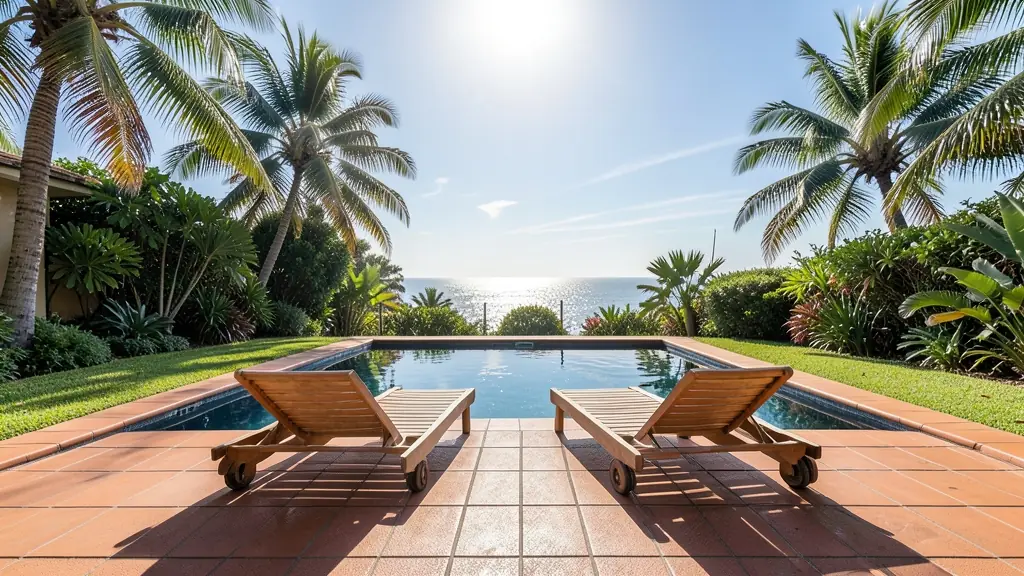
Outdoor rubber tiles give grip on wet feet, a softer surface for children and a floor that does not get as hot or hard as stone. Around pools, on patios and braai areas, on balconies and roof decks and along garden paths, they are a practical answer to slippery or cracked paving. The tiles are only as good as what is under them, though: outdoors the base, the falls and the drainage decide whether the floor lasts. This page covers where they work, the base on paving, concrete, timber or soil, colour in the sun, and how to get quotes.
Where outdoor tiles work
- Pool surrounds, for grip on wet feet.
- Patios, stoeps and braai areas, where a dropped glass or plate is less likely to break.
- Balconies and roof decks, which need a light, drained surface.
- Walkways and garden paths, including ramps where people slip.
- Outdoor play areas; for equipment with a fall height, see playground rubber tiles.
For one large joint-free area or curves around trees, look at poured EPDM; for a paved look, rubber pavers.
Base, falls and drainage
Outdoors, the base must be firm and drain. Water runs through the tile joints, so the surface below needs a fall towards a drain or the garden, or water sits under the tiles, grows algae and lifts edges. Laying over existing paving or a concrete slab is common if they are sound and fall the right way. Fix loose pavers and fill hollows first. Tiles are loose laid in a frame, glued with PU adhesive or joined with pins, depending on the tile and the wind and foot traffic. Pool areas usually get glued or pinned edges.
Balconies, roof decks, timber and dirt
On a waterproofed balcony or flat roof, the tiles must not damage the waterproofing: no screws through it, and ask the waterproofer before gluing. An old timber deck must be sound, with rotten boards replaced, before tiles go on. To lay rubber tiles on dirt, you first build a base: dig out topsoil, compact a layer of crusher run in thin layers with a fall, and add a firm edge. Laying straight onto soil gives a floor that sinks and moves within a season.
Colour and sun
South African UV is hard on colour. Plain black SBR tiles stay black but get hot in full sun. Coloured SBR fades fastest. Tiles with an EPDM top layer hold colour much better and are the usual choice for terracotta, green, grey or beige outdoors. Lighter colours stay cooler underfoot. Sweep sand and leaves off often, and hose down; grit wears the surface.
What to put in your request
- Where the tiles go: pool, patio, balcony, roof or path
- The area in metres and a photo of the base
- The base now: paving, concrete, timber or soil
- The colour you want, and whether it is in full sun
- Whether the base needs work and who lays the tiles
Outdoor Rubber Tiles for gyms, schools, homes, industry and farms
- Gyms and fitness studios: outdoor training yards and functional fitness areas beside the gym
- Schools, crèches and play areas: pool surrounds, paths and covered outdoor play spaces
- Homeowners: pool surrounds, patios, braai areas and balconies that need grip
- Factories, mines and plants: outdoor walkways, smoking areas and canteen patios
- Shops, offices and entrances: restaurant terraces, office park walkways and rooftop spaces
- Hotels, lodges and restaurants: hotel and lodge pool decks, rooftop bars and garden paths
- Municipalities, parks and sports clubs: public pool surrounds, park paths and outdoor gym areas
- Hospitals, clinics and care homes: care home garden paths and hydrotherapy pool surrounds
- Farms, stables and dairies: farm stall patios, wash areas and paths around the homestead
Frequently asked questions
Do you sell or lay outdoor tiles yourselves?
No. We are a free quote request service. We pass your request to independent suppliers and installers who work in your area, and they quote you directly on the tiles, the base work and the laying.
How do I install rubber tiles on dirt?
Do not lay them straight on soil. Remove the topsoil, compact crusher run in layers with a fall so water runs off, add an edge restraint, then lay the tiles. For a play or path area, ask a supplier whether pavers or poured rubber suit better.
Are outdoor rubber tiles slippery when wet?
Most give good grip wet, which is why they are used at pools, but algae, sunscreen and mud make any surface slippery. Keep them clean and drained. If slip resistance matters for a commercial pool, ask for the maker's slip test results rather than relying on a promise that the tiles are slip-proof.
Can rubber tiles go over my old paving?
Usually, if the paving is firm and falls towards a drain. Re-bed loose or sunken pavers first, because the tiles will follow every dip. Check door thresholds: the tiles raise the floor level, and water must not be pushed towards the house. Where the tiles meet a lawn or path, fit a ramp or a firm edge so the border cannot curl.
Outdoor Rubber Tiles by province and city
- Johannesburg
- Pretoria
- Centurion
- Midrand
- Sandton
- Randburg
- Roodepoort
- Krugersdorp
- Randfontein
- Germiston
- Boksburg
- Benoni
- Kempton Park
- Alberton
- Vanderbijlpark
- Vereeniging
- Durban
- Pinetown
- Pietermaritzburg
- Richards Bay
- Newcastle
- Ladysmith
- Gqeberha (Port Elizabeth)
- East London
- Kariega (Uitenhage)
- Mthatha
- Cape Town
- Bellville
- Paarl
- Stellenbosch
- George
- Worcester
- eMalahleni (Witbank)
- Middelburg
- Secunda
- Mbombela (Nelspruit)
- Rustenburg
- Brits
- Klerksdorp
- Potchefstroom
- Mahikeng
- Polokwane
- Tzaneen
- Kimberley
- Upington
- Bloemfontein
- Welkom
- Sasolburg